
Memphis Egypt: Complete Travel Guide
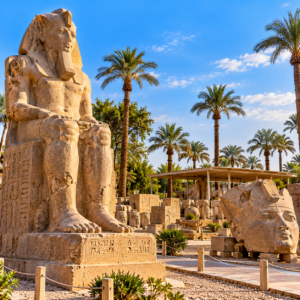
Memphis was one of the most important cities in ancient Egypt. Located near the modern village of Mit Rahina, south of Cairo, it served as a political, administrative, and religious center for much of the country’s early history. Although the ancient city has largely disappeared beneath centuries of settlement and change, its archaeological remains offer a fascinating glimpse into the civilization that built Egypt’s famous pyramids.
Today, visitors explore Memphis mainly through the Mit Rahina Open-Air Museum, where some of the site’s most remarkable surviving monuments are displayed. Highlights include a colossal fallen statue of Ramesses II, an impressive alabaster sphinx, and remains connected with the ancient city’s religious history.
Memphis is particularly rewarding for travelers who want to understand the historical background of nearby Saqqara, Dahshur, and Giza. Rather than being another destination filled with enormous pyramids, it provides a different perspective on the city and society that supported ancient Egypt’s royal monuments.
This guide covers the history of Memphis, the best things to see, ticket prices, opening hours, transportation from Cairo, and how to combine your visit with other archaeological sites.
Where Is Memphis in Egypt?
Memphis is located near Mit Rahina, in the Badrashin area of Giza Governorate, south of Cairo. The archaeological site lies within the wider landscape associated with the ancient capital and its surrounding cemeteries.
Its location makes it relatively easy to combine with Saqqara and Dahshur. These destinations contain some of Egypt’s most important pyramid complexes and provide a broader picture of how royal architecture and burial traditions developed over time.
For travelers staying in Cairo or Giza, Memphis is usually visited by road. You can arrange a private driver, take a taxi or ride-hailing service where available, or book a guided tour that includes several archaeological stops.
The modern visitor attraction is relatively compact compared with the wider archaeological area. Most people visit to see the surviving monuments at Mit Rahina rather than to explore an extensive set of standing city ruins.
What Was Memphis in Ancient Egypt?
Memphis was one of ancient Egypt’s earliest and most influential cities. According to traditional accounts, it was founded by the legendary first king of Egypt, Menes, around 3100 BC. Its exact early history is complex, but its importance as a royal and administrative center is well established.
The city was particularly prominent during the Early Dynastic Period and the Old Kingdom. It remained an important political and religious center for more than three thousand years, even as power shifted between different Egyptian cities and regions.
Memphis occupied a strategic position near the point where the Nile Valley meets the Nile Delta. This location helped connect different parts of the country and supported its development as a center of government, trade, and religious activity.
Why Was Memphis So Important?
Memphis was more than a royal residence. It was a major center of administration, craftsmanship, and religious life.
The city was closely associated with Ptah, a god connected with creation and craftsmanship. His temple was among the most important religious institutions in ancient Egypt.
Memphis was also linked to the royal cemeteries that developed around the city. The wider necropolis includes the pyramid fields of Giza, Saqqara, and Dahshur, making the area essential for understanding the relationship between ancient Egyptian cities, royal power, and burial practices.
Why Did Memphis Decline?
Memphis gradually lost its position as Egypt’s principal political center as power shifted to other cities over the course of Egyptian history. Changes in administration, religious institutions, and settlement patterns contributed to its long-term decline.
Over time, parts of the ancient city were dismantled, reused, buried, or affected by changes in the surrounding landscape.
As a result, modern visitors should not expect to find a complete ancient city with streets, houses, and temples standing intact. Much of Memphis survives through archaeological remains and objects preserved in the Mit Rahina museum area and other collections.
Memphis Open-Air Museum: What Can You See?
The Mit Rahina Open-Air Museum is the main visitor attraction associated with Memphis. It displays important surviving monuments from the ancient city and offers a manageable introduction to its history.
Most visits focus on a small number of major exhibits. You do not need an entire day to see the main highlights, but taking time to understand their historical context makes the experience more rewarding.
1. The Colossal Statue of Ramesses II
The colossal statue of Ramesses II is the museum’s best-known attraction.
Ramesses II was one of ancient Egypt’s most famous pharaohs, ruling during the Nineteenth Dynasty. He commissioned major building projects throughout Egypt and left an extensive legacy of monuments, inscriptions, and royal images.
The colossal statue at Memphis is particularly impressive because of its size and the surviving detail in the carving. Today, the fallen statue is displayed in a specially arranged viewing area that allows visitors to examine it from different levels.
Looking at the sculpture from above can help you appreciate its enormous scale. From closer viewpoints, you can study details of the face, royal features, and stonework.
Allow enough time to view the statue from more than one angle rather than simply taking a quick photograph and moving on.
2. The Alabaster Sphinx
Another important highlight is the alabaster sphinx displayed at Mit Rahina.
Like the more famous Great Sphinx at Giza, it combines a lion’s body with a human head. However, it is smaller and carved from a different stone, giving it a distinct appearance.
The sculpture demonstrates the importance of sphinx imagery in ancient Egyptian royal and religious traditions. These figures could symbolize strength, protection, and royal authority.
The alabaster sphinx is an excellent stop for visitors interested in ancient Egyptian sculpture. Its material, proportions, and surviving features make it worth examining closely.
3. Remains Associated with the Temple of Ptah
Memphis was an important religious center, particularly because of its association with Ptah.
The Temple of Ptah was one of the city’s major religious institutions, but much of the ancient city and its temple complex no longer survives as standing architecture.
Visitors may encounter archaeological remains and objects connected with Memphis’s religious history. These help illustrate the importance of the city as a place of worship, royal ceremony, and craftsmanship.
Because the surviving remains are limited compared with the original scale of the ancient city, a guide or a little advance reading can make this part of the visit easier to understand.
4. Other Sculptures and Archaeological Displays
The museum grounds contain additional archaeological objects and stone monuments associated with Memphis.
The exact displays and visitor access arrangements can change as conservation and development work progresses. Take time to look around the grounds rather than focusing only on the largest statue.
The museum’s compact layout makes it possible to explore the principal exhibits without a demanding walking schedule.
How Long Do You Need at Memphis?
For most travelers, around 45–90 minutes is a reasonable amount of time to explore the Mit Rahina Open-Air Museum.
A shorter visit may be sufficient if you mainly want to see the colossal statue and alabaster sphinx. Allow longer if you are interested in sculpture, ancient religious history, or taking photographs from different viewpoints.
Memphis is generally best treated as one stop on a broader archaeological itinerary rather than a full-day destination by itself.
If you are visiting with a guide, ask how much time is allocated to the museum and whether that includes the journey between stops.
Memphis Ticket Prices and Opening Hours
Ticket prices and operating hours can change, so check the official Ministry of Tourism and Antiquities listing before visiting.
The official Memphis ticket portal currently lists the following general admission prices:
| Visitor category | Published admission price |
|---|---|
| Foreign adult | EGP 200 |
| Foreign student | EGP 100 |
| Egyptian adult | EGP 10 |
| Egyptian student | EGP 5 |
The official portal lists standard summer and winter opening from 8:00 AM, with last entry at 4:00 PM. During Ramadan, the listed schedule is shorter, with last entry at 3:00 PM.
Arrive well before the last-entry time, especially if Memphis is one stop on a longer excursion. Keep your ticket with you and follow any instructions posted at the entrance.
Official resources:
Prices and schedules above reflect the published official listing checked for this guide and should be reconfirmed before travel.
How to Get to Memphis from Cairo
Memphis is south of central Cairo, near Mit Rahina. It is usually reached by road, and the most suitable transport option depends on your budget, itinerary, and comfort with independent travel.
Private Driver
Hiring a private driver is one of the easiest ways to visit Memphis, particularly if you want to combine it with Saqqara and Dahshur.
You can agree on the departure time, order of stops, and waiting arrangements before leaving. This is useful because the archaeological sites are spread across a wider area rather than being concentrated in one visitor complex.
Confirm the total fare and the expected return time in advance. If you are visiting multiple sites, make sure the driver understands the full itinerary.
Guided Tour
A guided tour can combine transportation with historical explanations. This is especially helpful at Memphis because many of the original city structures no longer survive, and understanding the site’s significance requires more historical context than simply looking at the remaining monuments.
Some tours include Memphis, Saqqara, and Dahshur in a single day. Check what the price covers, including entrance tickets, guiding services, and transport.
Taxi or Ride-Hailing Service
A taxi or ride-hailing service may be convenient for the journey from Cairo, depending on local availability.
However, do not assume that finding a return car from the archaeological site will be straightforward. Arrange a pickup in advance or agree with your driver to wait while you explore.
Public Transportation
Public transportation can be an option for travelers on a tighter budget, but the journey may involve several stages and a local transfer. It is generally less convenient if you want to visit Memphis and several other archaeological sites in one day.
For most short-stay visitors, a private driver or organized tour is the simplest option.
Can You Visit Memphis and Saqqara in One Day?
Yes. Memphis and Saqqara are commonly combined because they are both part of the wider archaeological landscape associated with ancient Memphis.
Saqqara is home to the Step Pyramid of Djoser, important royal pyramids, decorated tombs, and other monuments. It offers a broader archaeological experience than the compact museum at Mit Rahina.
Visiting both sites helps you connect the history of the ancient capital with the royal burial grounds that developed around it.
A practical itinerary could look like this:
Morning: Saqqara
Start at Saqqara while temperatures are more comfortable. Visit the Step Pyramid complex and choose additional tombs or monuments according to your interests and the current access arrangements.
Midday: Memphis
Continue to the Mit Rahina Open-Air Museum to see the colossal statue of Ramesses II, the alabaster sphinx, and other archaeological displays.
Afternoon: Dahshur, if time allows
If you have enough time and your transport arrangement permits, continue to Dahshur to see the Bent Pyramid and Red Pyramid.
This is a full archaeological day, so avoid trying to explore every monument in detail. Select your priorities in advance and verify opening hours for each location.
Memphis, Saqqara, or Dahshur: Which Should You Visit?
These destinations complement one another, but each has a different focus.
| Site | Main highlight | Best for |
|---|---|---|
| Memphis | Colossal statue of Ramesses II and alabaster sphinx | Ancient city history, sculpture, and a short museum visit |
| Saqqara | Step Pyramid of Djoser and decorated tombs | Early pyramid architecture and archaeological variety |
| Dahshur | Bent Pyramid and Red Pyramid | Pyramid design and architectural development |
If you have time for only one site and your main interest is pyramids, Saqqara or Dahshur may offer more monuments to explore.
If you want to understand the history of the ancient capital and see some of its surviving sculpture, Memphis is a valuable addition.
For a complete day focused on ancient Egyptian history, combining all three can provide a rewarding overview of the city, its religious traditions, and the development of royal burial architecture.
Best Time to Visit Memphis
The best time to visit depends on the weather and how you plan to combine Memphis with other sites.
The museum includes outdoor areas, so mornings are generally a sensible choice, particularly during warmer months. You can explore the exhibits before the strongest midday heat and then continue to Saqqara or Dahshur.
Visiting During the Cooler Months
The cooler months are often more comfortable for archaeological sightseeing around Cairo. You can spend more time outdoors without dealing with the same intensity of summer heat.
Even in winter, carry water and sun protection because the open areas can be bright.
Visiting During Summer
Summer visits require extra preparation. Wear breathable clothing, bring drinking water, and use a hat, sunglasses, and sunscreen.
If you plan to visit several sites on the same day, schedule the most extensive outdoor walking for the cooler part of the morning.
Always confirm opening hours before departure, especially around Ramadan and public holidays.
What to Wear and Bring
Memphis is a relatively compact archaeological attraction, but practical preparation can make the visit more comfortable.
- Comfortable shoes: Wear footwear suitable for walking around outdoor exhibits.
- Water: Carry drinking water, particularly during warm weather.
- Sun protection: A hat, sunglasses, and sunscreen are useful.
- Camera or phone: The colossal statue and alabaster sphinx are among the main photography subjects. Check any current restrictions before using professional equipment.
- A little historical background: Reading about Memphis and Ptah before your visit can help you understand the significance of the surviving monuments.
- A flexible schedule: Leave time for transportation and any delays between archaeological stops.
Is Memphis Egypt Worth Visiting?
Memphis is worth visiting if you are interested in ancient Egyptian history and want to understand the capital that helped shape the civilization associated with the nearby pyramids.
It is especially suitable for:
- Travelers combining Saqqara and Dahshur in a day trip.
- History enthusiasts interested in ancient Egyptian cities.
- Visitors who want to see the colossal statue of Ramesses II.
- Travelers interested in royal sculpture and religious traditions.
- People who prefer a short archaeological stop rather than another large pyramid complex.
However, it is important to set realistic expectations. Modern Memphis is not a fully preserved ancient city, and the Mit Rahina museum is relatively compact.
If you expect extensive standing ruins, long streets of ancient buildings, or a large collection of intact temples, the site may feel smaller than anticipated.
Its value lies in the surviving monuments and the historical context they provide. With a guide or a well-planned itinerary, Memphis becomes a meaningful part of exploring the ancient landscape south of Cairo.
Frequently Asked Questions
Where is ancient Memphis in Egypt?
Memphis is located near the modern village of Mit Rahina, in the Badrashin area south of Cairo. The visitor attraction is the Mit Rahina Open-Air Museum.
Why was Memphis important in ancient Egypt?
Memphis was an important political, administrative, and religious center. It served as a capital during the Early Dynastic Period and Old Kingdom and remained influential for much of ancient Egyptian history.
What is there to see at Memphis today?
The main highlights at the Mit Rahina Open-Air Museum include the colossal statue of Ramesses II, an alabaster sphinx, and other archaeological displays associated with the ancient city.
Is Memphis a UNESCO World Heritage Site?
Memphis and its necropolis are part of the UNESCO World Heritage property known as Memphis and its Necropolis, inscribed on the World Heritage List in 1979.
How long should I spend at Memphis?
Allow approximately 45–90 minutes for the main exhibits. You may want more time if you are particularly interested in sculpture or visiting with a guide.
How much is the Memphis entrance ticket?
The official ticket portal currently lists EGP 200 for foreign adults and EGP 100 for foreign students, with lower listed rates for Egyptian visitors. Confirm the current price before traveling.
What are the opening hours at Memphis?
The official portal lists standard opening from 8:00 AM, with last entry at 4:00 PM during summer and winter schedules. Ramadan hours are shorter. Check the current listing before your visit.
Can I visit Memphis and Saqqara on the same day?
Yes. The sites are often combined in one excursion. You can also add Dahshur if you arrange transportation and allow enough time for each stop.
Is Memphis better than Saqqara?
They offer different experiences. Memphis is best for its surviving sculpture and the history of the ancient capital. Saqqara has a wider range of archaeological monuments, including the Step Pyramid and decorated tombs.
Is Memphis suitable for children?
The visit is relatively short and includes a large statue that many children may find interesting. However, the experience is mainly archaeological, so it may be more appealing to children who enjoy history and ancient monuments.
Final Thoughts
Memphis played a major role in ancient Egyptian history, serving as a political and religious center for centuries. Today, the Mit Rahina Open-Air Museum preserves a small but important selection of monuments that help visitors connect the ancient capital with the surrounding pyramid fields.
The colossal statue of Ramesses II and the alabaster sphinx are the main reasons to visit, while the site’s historical significance adds depth to a trip through Saqqara and Dahshur.
Plan Memphis as a short stop, confirm current ticket information, and consider visiting with a guide if you want to understand the remains in greater detail. Combined with the nearby archaeological sites, it offers a useful perspective on the civilization that built Egypt’s most famous monuments.