
Dahshur Pyramids: Complete Visitor Guide
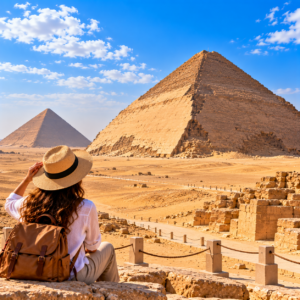
Egypt’s most famous pyramids stand at Giza, but some of the country’s most fascinating ancient monuments lie farther south, in the quieter archaeological area of Dahshur. Here, two remarkable structures—the Bent Pyramid and the Red Pyramid—tell the story of how ancient Egyptian builders developed the smooth-sided pyramid design that later became famous around the world.
A visit to Dahshur offers a different experience from the busy Giza Plateau. The landscape is more open, the monuments are spread across a desert setting, and the pyramids themselves reveal important details about the engineering challenges faced by builders more than 4,500 years ago.
Dahshur is particularly rewarding for travelers interested in ancient Egyptian history, architecture, and archaeology. It can be visited as a separate excursion from Cairo or combined with nearby Saqqara and Memphis for a full day exploring the development of Egypt’s pyramid-building tradition.
This guide explains which pyramids to see, how to get there, how much time to allow, what to know about tickets, and how to prepare for a comfortable visit.
What Is Dahshur?
Dahshur is an archaeological site south of Cairo, within the ancient necropolis associated with Memphis, one of Egypt’s important early capitals. The area contains royal pyramids built during different periods of ancient Egyptian history, including monuments from the Old Kingdom and Middle Kingdom.
Dahshur is best known for two pyramids built for King Sneferu, the founder of the Fourth Dynasty and the father of Khufu, who later became associated with the Great Pyramid at Giza.
The Bent Pyramid and the Red Pyramid are especially important because they show two stages in the development of pyramid construction. One has a distinctive change in slope, while the other has the more regular, smooth-sided form that became a defining feature of Egyptian royal pyramids.
The site also contains remains of other pyramids, including the Black Pyramid of Amenemhat III, which is now in a much more deteriorated condition.
For visitors, Dahshur offers more than an opportunity to photograph ancient monuments. It provides a chance to understand how pyramid architecture evolved before the great structures of Giza were built.
The Bent Pyramid: Dahshur’s Most Unusual Monument
The Bent Pyramid is one of the most distinctive pyramids in Egypt. Its sides begin at a relatively steep angle, then change to a shallower slope higher up, creating the unusual outline that gives the monument its name.
King Sneferu commissioned the pyramid during the Fourth Dynasty. Its changing shape is generally understood as evidence of adjustments made during construction, although the precise reasons behind the change remain a subject of archaeological interpretation.
Rather than seeing the altered shape as simply a mistake, visitors can view it as an important part of the history of pyramid engineering. Ancient builders were working on an enormous scale, using their experience to refine the design and construction of royal monuments.
What Makes the Bent Pyramid Special?
One of its most remarkable features is the survival of substantial sections of its original outer limestone casing. Many Egyptian pyramids lost much of their smooth outer covering over the centuries, leaving the rougher core masonry visible. At Dahshur, the remaining casing helps visitors imagine how the pyramid may have looked when its exterior was more complete.
The Bent Pyramid also stands out because of its unusual proportions and its position in the surrounding landscape. Its shape looks noticeably different from the familiar pyramids at Giza, making it an excellent subject for photography and architectural comparison.
Can You Go Inside the Bent Pyramid?
Access to pyramid interiors can depend on current site arrangements, conservation work, and operational restrictions. Do not assume that every internal passage or chamber will be open during your visit.
If entering the Bent Pyramid is important to your plans, confirm the current access arrangements with the official ticketing service or site staff before traveling. You can still appreciate the monument from outside even if interior access is unavailable.
The Red Pyramid: A Major Step in Pyramid Design
The Red Pyramid is the other essential stop at Dahshur. Built for King Sneferu, it is widely recognized as one of the earliest successful examples of a true smooth-sided pyramid.
Its name comes from the reddish color of the exposed stone. The monument originally had a white limestone casing, but much of that outer material was removed over time.
The Red Pyramid is especially significant because it represents a more regular pyramid design than the Bent Pyramid. Its construction reflects the architectural progress that helped prepare the way for the large pyramids built at Giza.
Why Should You Visit the Red Pyramid?
The Red Pyramid is worth seeing for several reasons:
- Its historical importance: It represents a crucial stage in the evolution of pyramid architecture.
- Its scale: It is one of Egypt’s largest pyramids and dominates the surrounding desert landscape.
- Its distinctive color: The reddish stone gives the monument a different appearance from the pyramids at Giza.
- Its interior passages: When entry is permitted, visitors may be able to descend through a narrow passage into the pyramid’s internal chambers.
The Red Pyramid is particularly interesting for travelers who want to look beyond the exterior appearance of ancient monuments and learn how their internal spaces were constructed.
What Is It Like to Enter the Red Pyramid?
Entering the Red Pyramid is not like walking into a modern museum. The descent involves a long, steep passage with a low ceiling, requiring visitors to bend forward and move carefully.
Inside, the passage leads to chambers with high corbelled ceilings, in which successive layers of stone project inward toward the top. These spaces demonstrate the structural techniques used by ancient builders to create large enclosed chambers beneath massive stone structures.
Before deciding to enter, consider your comfort with confined spaces, steep steps, and physically demanding movement. The passage may be difficult for visitors with mobility limitations or claustrophobia.
Wear shoes with a good grip, carry only a small bag, and follow the instructions of site staff. Interior access should always be confirmed locally because availability can change.
Other Pyramids and Archaeological Remains at Dahshur
Although the Bent and Red pyramids are the main attractions for most visitors, Dahshur is not limited to these two monuments.
The wider archaeological area includes pyramids associated with later kings, including structures from the Middle Kingdom. Their condition varies, and some are much more eroded than the better-known monuments built for Sneferu.
The Black Pyramid
The Black Pyramid was built for King Amenemhat III during the Middle Kingdom. Unlike the Red Pyramid, it is not preserved as a complete, smooth-sided structure. Its remains have deteriorated considerably, leaving a very different appearance.
The monument helps demonstrate that pyramid building continued long after the great pyramids of the Old Kingdom. It also shows that not every royal pyramid survived equally well or followed exactly the same construction approach.
If you have a strong interest in Egyptian archaeology, learning about these later structures adds context to the site. However, travelers with limited time should prioritize the Bent Pyramid and Red Pyramid.
Dahshur vs. Giza: Which Should You Visit?
Dahshur and Giza offer different experiences, and neither needs to replace the other.
| Feature | Dahshur | Giza |
|---|---|---|
| Main highlights | Bent Pyramid and Red Pyramid | Great Pyramid, Pyramid of Khafre, Pyramid of Menkaure and the Sphinx |
| Visitor experience | A more open archaeological landscape | A major visitor destination with extensive tourist facilities |
| Best for | Pyramid architecture and historical development | Iconic landmarks and a first visit to Egypt |
| Time needed | Around 1.5–3 hours, depending on access and pace | Half a day or longer for a more complete visit |
| Typical atmosphere | Often quieter than Giza | Generally busier, especially at popular times |
If this is your first trip to Egypt, Giza is usually the essential starting point because of its globally recognized monuments. Dahshur is an excellent addition if you want to understand how those later pyramids became possible.
Travelers who have already visited Giza may find Dahshur especially rewarding because its monuments offer a different perspective on the same broader story.
How to Get to Dahshur from Cairo
Dahshur lies south of Cairo, in the wider Giza Governorate area. Although it is possible to organize a visit independently, reaching the archaeological site can be less straightforward than visiting central Cairo attractions.
Private Car or Driver
Hiring a private driver is one of the most practical options. It gives you flexibility over departure time, how long you spend at the pyramids, and whether you continue to Saqqara or Memphis.
Agree on the itinerary, waiting time, and total price before the journey begins. If you plan to visit several archaeological sites, ask the driver to confirm the order of stops and realistic travel times.
Guided Tour
A guided tour can simplify transport and help explain the historical differences between the pyramids. Some tours combine Dahshur with Saqqara and Memphis, allowing you to explore several important sites in one day.
Check what the tour includes before booking. Transportation, guiding, entrance tickets, meals, and access to pyramid interiors may be treated as separate items.
Taxi or Ride-Hailing Service
A taxi or ride-hailing service may be useful for the outward journey, depending on local availability. However, do not assume you will easily find a return ride waiting at the archaeological site.
Arrange a return journey in advance, or agree with your driver to wait while you explore.
Public Transportation
Public transportation can reduce transport costs, but it may require several stages and a final taxi or other local transfer. It is less convenient if you are unfamiliar with the area or want to visit several archaeological sites in one day.
For most short-stay visitors, a private driver or organized tour offers the simplest logistics.
Dahshur Pyramids Tickets and Opening Hours
Before visiting Dahshur, check the official Ministry of Tourism and Antiquities monument listing and its electronic ticketing service.
The official Dahshur listing currently displays the following general admission prices:
| Visitor category | Listed admission |
|---|---|
| Foreign adult | EGP 200 |
| Foreign student | EGP 100 |
| Egyptian adult | EGP 10 |
| Egyptian student | EGP 5 |
These are published site-admission prices, not a guarantee that every special access option or service is included. Rules for student eligibility and identification may apply, and fees can change.
The Ministry’s monument page lists opening hours of 8:00 AM to 5:00 PM. However, the official booking portal lists a last-entry time of 4:00 PM for its standard summer and winter schedules, with different hours during Ramadan.
For that reason, check the live official listing before leaving Cairo. Aim to arrive early rather than planning to enter close to the last-entry time.
Official pages to check:
- Ministry of Tourism and Antiquities: Dahshur archaeological site.
- Official electronic ticketing portal: Dahshur ticket details.
If you want to enter a pyramid, confirm whether that interior is open and whether any additional ticket or restriction applies on your travel date.
How Much Time Do You Need at Dahshur?
Most travelers should allow approximately two hours for the main highlights, although your visit may be shorter or longer depending on access, transportation, and how much time you spend taking photographs.
A Quick Visit: 1–1.5 Hours
A short visit is suitable if you mainly want to see the Bent Pyramid and Red Pyramid from outside. You can compare their shapes, take photographs, and learn the basic historical story.
This option works best when Dahshur is one stop on a longer day trip.
A Standard Visit: Around 2 Hours
For most visitors, two hours is a reasonable starting point. This allows time to explore the main monuments without rushing too much.
Your visit may include:
- Seeing the Bent Pyramid and studying its unusual profile.
- Visiting the Red Pyramid and photographing its exterior.
- Entering an accessible pyramid interior if permitted and if you feel comfortable doing so.
- Allowing time to move between the monuments and listen to a guide.
A Longer Visit: 3 Hours or More
Allow extra time if you have a strong interest in archaeology, want to explore more of the site, or plan to enter a pyramid. Interior passages can slow your progress, and the exposed landscape makes breaks and careful movement important.
Do not schedule a tight transfer immediately after your visit. A little flexibility is useful if access arrangements or transport take longer than expected.
The Best Time to Visit Dahshur
For a more comfortable experience, plan your visit during the cooler part of the day. Early morning is generally a sensible choice because much of the archaeological landscape is exposed to direct sunlight and offers limited shade.
Visiting During the Cooler Months
The cooler months are often more comfortable for exploring archaeological sites around Cairo. You can spend longer outside without dealing with the same intensity of summer heat.
Even in winter, bring water and sun protection. Desert conditions can still feel bright and dry, particularly in open areas.
Visiting During Summer
Summer visits require more preparation. High temperatures can make walking between monuments tiring, especially where shade is limited.
If you visit during the hotter months:
- Arrive as early as practical.
- Carry sufficient drinking water.
- Wear breathable clothing and comfortable closed shoes.
- Use a hat, sunglasses, and sunscreen.
- Take breaks rather than rushing between monuments.
Check current opening hours before departure, particularly around public holidays and Ramadan.
What to Wear and Bring
Dahshur is an archaeological site rather than a modern visitor complex, so practical clothing matters more than dressing for a city sightseeing day.
Wear comfortable walking shoes. The ground may be uneven, sandy, or dusty. Shoes with a secure grip are especially useful if you intend to enter a pyramid.
Bring water. The open landscape can become tiring in warm weather, and you should not rely on finding refreshments immediately beside every monument.
Protect yourself from the sun. A hat, sunglasses, and sunscreen are useful throughout much of the year.
Carry a small bag. A large backpack can be inconvenient in narrow pyramid passages. If you plan to go inside, take only what you need and follow any site instructions.
Bring a charged phone or camera. Dahshur offers distinctive views, especially when photographed from different angles. Check the current rules before using professional photography equipment or other specialized gear.
Keep your ticket accessible. Retain it throughout your visit and follow any instructions from the staff.
Can You Visit Dahshur and Saqqara in One Day?
Yes. Combining Dahshur with Saqqara is one of the most logical ways to explore the development of pyramid architecture near Cairo.
At Dahshur, you can compare the Bent Pyramid and Red Pyramid. At Saqqara, you can visit the Step Pyramid of Djoser and explore a wider archaeological landscape containing tombs and other monuments.
Some itineraries also include Memphis, the ancient capital, where visitors can see archaeological remains and important sculptures.
A practical day could follow this order:
- Morning: Dahshur. Start with the Bent Pyramid and Red Pyramid while temperatures are more comfortable.
- Late morning or midday: Saqqara. Continue to the Step Pyramid and select other monuments according to your interests and available time.
- Afternoon: Memphis, if time allows. Visit the open-air museum and see its major displays before returning to Cairo.
The exact order depends on opening times, ticket availability, travel conditions, and how much you want to explore. Trying to visit every monument at every site can make the day feel rushed, so choose priorities in advance.
If you prefer a relaxed pace or want to enter a pyramid, consider reducing the number of stops.
Is Dahshur Worth Visiting?
Dahshur is worth visiting if you want more than the standard pyramid photographs. Its two principal monuments tell an important story about ancient Egyptian engineering, and their contrasting shapes make that story easy to understand even without a specialist background.
It is particularly suitable for:
- Travelers interested in ancient Egyptian history.
- Visitors who have already seen the pyramids at Giza.
- Photography enthusiasts looking for different pyramid shapes and desert views.
- Travelers combining several archaeological sites south of Cairo.
- Anyone who wants to understand the relationship between early pyramid experiments and later royal monuments.
Dahshur may be less suitable if you have very limited time in Cairo and have not yet visited the major Giza landmarks. It can also be challenging for visitors who have difficulty walking on uneven ground or bending through narrow passages, especially if they hope to enter a pyramid.
You do not need to enter a pyramid to appreciate the site. The exterior architecture alone makes Dahshur a worthwhile stop for travelers interested in Egypt’s ancient past.
Frequently Asked Questions
Where are the Dahshur Pyramids located?
Dahshur is south of Cairo, within the archaeological landscape associated with ancient Memphis. It is usually visited by road from Cairo or as part of a wider excursion to Saqqara and Memphis.
Which pyramids should I see at Dahshur?
Prioritize the Bent Pyramid and the Red Pyramid. They are the site’s best-known monuments and illustrate two important stages in the development of pyramid design.
Why is the Bent Pyramid shaped differently?
Its sides change angle partway up. This is generally understood as a construction adjustment, although the exact reasons remain a matter of archaeological interpretation.
Why is the Red Pyramid red?
Its name comes from the reddish color of the exposed stone. The pyramid originally had a white limestone casing that covered much of this color.
Can visitors enter the Red Pyramid?
Interior access may be available, but conditions can change. Check the official ticketing information and local instructions before your visit. The passage is narrow, steep, and physically demanding.
How much is a Dahshur ticket?
The official Ministry listing currently displays EGP 200 for foreign adults and EGP 100 for foreign students, with lower listed prices for Egyptian visitors. Confirm current prices and eligibility rules before traveling.
What are the opening hours?
The Ministry’s Dahshur page lists 8:00 AM–5:00 PM, while the official booking portal gives 4:00 PM as the last-entry time under its standard summer and winter schedules. Check the current official information before setting out.
Is Dahshur less crowded than Giza?
Dahshur is generally a quieter alternative to the main Giza attractions, although visitor numbers vary. Its open desert setting and less prominent place on many itineraries are part of its appeal.
Can I visit Dahshur without a guide?
Yes, an independent visit may be possible. However, arranging reliable transport in advance is important, and a knowledgeable guide can help explain the architectural differences between the pyramids.
Should I visit Dahshur or Saqqara first?
Both are valuable, and the best order depends on your transport and itinerary. Dahshur is particularly useful for comparing the Bent and Red pyramids, while Saqqara offers the Step Pyramid of Djoser and a broader collection of archaeological monuments.
Final Tips for Visiting Dahshur
Dahshur is one of the most revealing places to visit if you want to understand how ancient Egyptian pyramid construction developed. The Bent Pyramid preserves evidence of a changing design, while the Red Pyramid demonstrates a more regular smooth-sided form.
Plan your transport before leaving Cairo, arrive early, carry water, and verify ticket prices, opening hours, and interior access through official channels. If you are combining Dahshur with Saqqara or Memphis, choose your main priorities instead of trying to fit every monument into one rushed day.
With a little preparation, Dahshur can become one of the most memorable archaeological stops on an Egypt itinerary—not just because of its pyramids, but because of the story they tell about the ingenuity and experimentation of ancient Egyptian builders.