
The Best Ancient Egyptian Sites Near Cairo
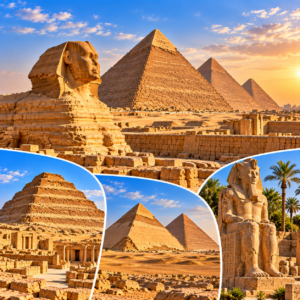
Cairo is one of the best places in Egypt to explore the remains of the ancient pharaohs. Within a relatively short journey from the modern capital, you can stand beside the Great Pyramid of Khufu, walk around the Step Pyramid of Djoser, explore the unusual pyramids of Dahshur, and see the remains of Memphis, one of ancient Egypt’s most important capitals.
The best ancient Egyptian sites near Cairo are not limited to the famous Pyramids of Giza. The surrounding region contains royal burial grounds, decorated tombs, ancient religious centers, and monuments that reveal how Egyptian architecture and royal traditions developed over thousands of years.
Some sites are easy to visit independently, while others are better explored with a private driver or an organized tour. The right choice depends on how much time you have, whether you are interested mainly in pyramids or broader history, and how far you are willing to travel.
This guide covers the most worthwhile ancient Egyptian sites near Cairo, what makes each one special, how much time to allow, and how to combine them into a practical itinerary.
1. Pyramids of Giza: The Essential First Visit
The Pyramids of Giza are the obvious starting point for anyone interested in ancient Egypt. Located on the Giza Plateau west of Cairo, the complex contains the pyramids of Khufu, Khafre, and Menkaure, along with the Great Sphinx and numerous smaller monuments. The pyramids were built as royal tombs during Egypt’s Fourth Dynasty.
The Great Pyramid of Khufu is the largest of the three main pyramids and the only surviving monument of the traditional Seven Wonders of the Ancient World. Even from a distance, its scale is impressive. Walking around the plateau gives you a better understanding of the size of the structures and the relationship between the pyramids, temples, and surrounding tombs.
What to see at Giza
- The Great Pyramid of Khufu: The largest pyramid on the plateau, with an interior that can be visited using a separate ticket.
- The Pyramid of Khafre: Often appears taller than Khufu’s pyramid because of its position and the remains of its original casing near the top.
- The Pyramid of Menkaure: The smallest of the three main pyramids.
- The Great Sphinx: A monumental sculpture with a human head and a lion’s body.
- The surrounding pyramid complex: Smaller pyramids, tombs, and remains associated with the royal burial grounds.
Allow around three to four hours for a basic visit, or longer if you want to enter a pyramid, explore additional monuments, or spend time photographing the plateau.
Giza is the best choice for first-time visitors who want to see Egypt’s most recognizable ancient monuments. However, it is also a popular attraction, so an early start can help you make better use of your time.
Practical tip: The general plateau ticket does not automatically include entry into every pyramid or special monument. Check the official Giza Plateau ticket information before visiting.
2. Saqqara: The Birthplace of Pyramid Architecture
Saqqara is one of the most important archaeological sites near Cairo and a particularly rewarding destination for visitors who want more than the familiar pyramid skyline.
Located southwest of the capital, Saqqara formed part of the necropolis of ancient Memphis. Its most famous monument is the Step Pyramid of Djoser, an early monumental stone pyramid that represents a major stage in the development of Egyptian royal tombs. The site also contains pyramids from later Old Kingdom dynasties, decorated private tombs, and underground burial complexes.
What to see at Saqqara
The Step Pyramid of Djoser is the principal attraction. Its stacked levels give it a distinctive appearance, quite different from the smooth-sided pyramids at Giza. The wider complex helps visitors understand that a pyramid was only one part of a much larger royal funerary site.
The Pyramid of Unas is especially significant because its burial chamber contains Pyramid Texts, among the earliest known collections of religious texts inscribed inside an Egyptian pyramid.
The Tombs of the Nobles provide a different perspective on ancient Egyptian life. Their carved and painted scenes can depict agricultural work, food production, crafts, religious practices, and other aspects of society.
The Serapeum consists of underground galleries associated with the burial of the sacred Apis bulls. Access to individual monuments may depend on current opening arrangements and ticket categories.
Plan on spending at least three hours at Saqqara if you want to explore beyond the main pyramid. History enthusiasts may prefer half a day.
Saqqara is an excellent choice for travelers interested in architecture, ancient religion, tomb decoration, and the development of pyramid building. It can also be combined with Memphis and Dahshur for a full day outside central Cairo.
Practical tip: Saqqara is an extensive archaeological area. Arrange reliable transport for the entire visit rather than assuming every monument will be within a short walk of the entrance.
3. Dahshur: The Bent Pyramid and Red Pyramid
Dahshur is one of the best places near Cairo to understand how ancient Egyptian builders experimented with pyramid design.
This royal necropolis contains monuments from several periods, including the Bent Pyramid and the Red Pyramid, both associated with Pharaoh Sneferu. The Bent Pyramid changes angle partway up its sides, while the Red Pyramid has the smooth-sided form that became characteristic of many later pyramids.
What makes Dahshur special?
The Bent Pyramid is visually unusual because its lower and upper sections have different slopes. It offers a striking example of the challenges involved in developing large pyramid structures.
The Red Pyramid is another major highlight. Its smooth sides make it an important monument in the history of pyramid construction. Visitors may be able to enter its interior when access is available, but conditions and access arrangements should be checked before traveling.
Dahshur also contains other pyramids, including the remains of Middle Kingdom royal monuments. The wider landscape is less dominated by modern development than many visitors expect around Cairo, although conditions can change.
Allow approximately one and a half to two hours for a focused visit to the principal monuments. Add more time if you want to explore every accessible area.
Dahshur is especially suitable for repeat visitors to Egypt, archaeology enthusiasts, and travelers who want to see pyramids beyond Giza. It is also a good choice for those interested in the transition from earlier pyramid forms to smooth-sided structures.
Practical tip: Dahshur is easier to visit with a private driver or as part of a combined tour. Check the current ticket and last-entry information through the official Dahshur listing.
4. Memphis: The Ancient Capital of Egypt
Memphis was one of ancient Egypt’s most important political and religious centers. Today, visitors mainly explore its surviving remains at Mit Rahina, where an open-air museum displays monuments associated with the ancient city.
Memphis and its surrounding necropolis form part of the UNESCO World Heritage property known as Memphis and its Necropolis. The wider heritage area includes the pyramid fields stretching from Giza through Saqqara to Dahshur.
What to see at Memphis
The most famous exhibits include a colossal statue of Ramesses II and an alabaster sphinx. These surviving monuments provide a sense of the scale and artistic ambition associated with ancient royal and religious centers.
Memphis is not as visually extensive as Giza, and the modern visitor experience is more compact. That makes it a useful addition to a day trip focused on the surrounding archaeological sites.
Allow approximately 45 minutes to an hour for a straightforward visit, although the time you need will depend on your interests and the areas open to visitors.
Memphis is best combined with Saqqara because the two sites are closely connected historically and geographically. Visiting them together gives you a broader understanding of the capital, its religious significance, and the extensive burial grounds surrounding it.
Practical tip: If you are booking a tour, confirm that Memphis is a genuine stop on the itinerary rather than simply a passing reference in the tour description.
5. Heliopolis and the Matariya Obelisk: A Lesser-Known Ancient Site
Travelers who want to explore ancient Egyptian history within modern Cairo can consider the remains associated with Heliopolis, known in ancient Egyptian tradition as Iunu.
Heliopolis was an important religious center associated with the worship of the sun god Ra. Much of the ancient city has disappeared beneath later development or was reused over time, but the area still preserves archaeological traces of its long history. The Cairo Governorate identifies the obelisk of King Senusret I in Matariya as one of the principal surviving monuments of ancient Heliopolis.
The Matariya Obelisk is a useful stop for visitors interested in the religious history of ancient Egypt, particularly the role of solar worship. It is a very different experience from visiting a large pyramid complex: the surviving monument sits within the modern urban environment rather than an extensive desert landscape.
This site is best suited to travelers who have already seen the main pyramids or who want to explore a lesser-known part of Cairo’s ancient history.
Allow extra time for navigating the surrounding neighborhood and checking the site’s current visitor arrangements. It is not a substitute for Giza or Saqqara if your main goal is to explore a large concentration of ancient monuments.
Practical tip: Verify access arrangements before making a special journey, as the archaeological remains of Heliopolis are spread across a developed urban area.
6. The Wider Memphis Necropolis: A Landscape of Pyramids and Tombs
One of the most useful ways to understand ancient Egyptian sites near Cairo is to look beyond individual attractions and consider the wider Memphis necropolis.
The UNESCO-listed property extends across a series of archaeological areas, including Giza, Saqqara, and Dahshur, as well as other burial grounds. Together, these sites document the development of royal tombs from early mastaba structures to monumental pyramids, alongside temples and private burials.
For most travelers, Giza, Saqqara, and Dahshur are the most practical places to prioritize. Other archaeological areas in the wider landscape may have limited visitor facilities or access restrictions, so they should not be assumed to be straightforward tourist stops.
If you have more than one day in Cairo, exploring the necropolis in separate visits is often more rewarding than trying to cover every location at once.
Which Ancient Egyptian Sites Near Cairo Should You Visit?
The best choice depends on your interests and the amount of time available.
| Site | Best for | Suggested visit time |
|---|---|---|
| Giza Plateau | Famous pyramids and the Great Sphinx | 3–4 hours |
| Saqqara | Early pyramid architecture and decorated tombs | 3–4 hours or longer |
| Dahshur | Bent Pyramid, Red Pyramid, and pyramid development | 1.5–2 hours |
| Memphis | Colossal statues and the ancient capital | 45–60 minutes |
| Heliopolis and Matariya Obelisk | Ancient religious history within modern Cairo | Allow time for local travel |
| Wider Memphis necropolis | Travelers with a strong interest in archaeology | Multiple visits may be best |
These are planning estimates, not official site durations. Your schedule will depend on traffic, ticket access, walking distances, the monuments you want to enter, and how much time you spend with a guide.
The Best One-Day Itinerary for Ancient Egyptian Sites Near Cairo
If you have only one day and want to explore several ancient sites, focus on a manageable route rather than attempting to see everything.
Option 1: Giza on Its Own
Start early at the Giza Plateau. Explore the three main pyramids and the Great Sphinx, then add an interior visit if you have booked the appropriate ticket and are comfortable with the conditions inside.
This is the best option for first-time visitors who want a thorough experience of the most famous monuments.
Option 2: Saqqara, Memphis, and Dahshur
Begin at Dahshur, continue to Saqqara, and finish at Memphis if opening times, transport, and your interests allow. This route provides a broad introduction to pyramid development and the ancient capital.
Expect a full day, with an early departure and a private driver or organized tour. If you are especially interested in tombs at Saqqara, consider spending more time there and dropping one of the other stops.
Option 3: Giza and Saqqara
This combination works for travelers who want to compare the famous pyramids at Giza with the earlier Step Pyramid at Saqqara. It is possible with careful planning and reliable transport, but it may feel rushed if you want to enter pyramids or explore several tombs.
For a more relaxed experience, visit Giza on one day and Saqqara on another.
Practical Tips for Visiting Ancient Egyptian Sites Near Cairo
Start early. Many of the main attractions involve walking outdoors with limited shade. An early departure also leaves more flexibility if traffic delays your journey.
Arrange transport in advance. Private drivers and organized tours are especially useful when visiting Saqqara, Memphis, and Dahshur in one day.
Check ticket inclusions. General admission may not cover entry into individual pyramids, special tombs, or other restricted areas. Use official ticket listings to confirm what you need.
Carry water and sun protection. Bring drinking water, a hat, sunscreen, and comfortable walking shoes. Desert sites can feel tiring even during cooler months.
Allow time for the return journey. Traffic around Cairo can be unpredictable. Avoid scheduling a flight, appointment, or important booking too close to your expected return time.
Consider a knowledgeable guide. A good guide can explain why the monuments were built, how royal burial traditions changed, and what the tomb reliefs reveal about daily life.
Check access before visiting lesser-known sites. Archaeological discoveries, conservation work, and visitor arrangements can affect access. Confirm current information before making a detour to a smaller site.
Frequently Asked Questions
What is the best ancient Egyptian site near Cairo?
The Giza Plateau is the essential first visit for most travelers because it contains the Great Pyramid and the Great Sphinx. Saqqara is an excellent next choice for its Step Pyramid and decorated tombs, while Dahshur is particularly rewarding for visitors interested in pyramid architecture.
Can I visit Giza, Saqqara, Memphis, and Dahshur in one day?
It may be possible with a private driver and an early start, but it is an ambitious itinerary. You will have limited time at each site, especially if you want to enter monuments or explore tombs. For a deeper experience, choose Giza on its own or combine Saqqara, Memphis, and Dahshur.
Which site is best for seeing pyramids without focusing only on Giza?
Saqqara and Dahshur are the strongest alternatives. Saqqara offers the Step Pyramid and a large collection of tombs, while Dahshur contains the Bent and Red Pyramids, which illustrate important stages in pyramid construction.
Is Memphis worth visiting?
Yes, especially if you combine it with Saqqara. Memphis helps explain the historical importance of the ancient capital and provides a compact visit to surviving monuments, including the colossal statue of Ramesses II and the alabaster sphinx.
Are all ancient Egyptian sites near Cairo easy to access?
No. Giza, Saqqara, Dahshur, and Memphis are established visitor destinations, but access and facilities vary across the wider archaeological landscape. Check official information before traveling to lesser-known locations.
How many days should I spend exploring ancient Egyptian sites near Cairo?
Allow at least one day for Giza and another for Saqqara, Memphis, and Dahshur if you want a more relaxed experience. Travelers with a strong interest in archaeology may benefit from additional time to explore individual tombs and monuments.
Final Thoughts
The best ancient Egyptian sites near Cairo offer much more than a chance to see pyramids. Giza provides the iconic monuments, Saqqara reveals an earlier stage of pyramid architecture, Dahshur shows how builders refined their designs, and Memphis connects these monuments to the history of an important ancient capital.
If this is your first visit, start with Giza. If you have another day, explore Saqqara, Memphis, and Dahshur together or split them into separate trips. And if you want to go beyond the most famous attractions, consider the surviving remains of Heliopolis and the wider Memphis necropolis.
With a sensible itinerary and transport arranged in advance, Cairo makes an excellent base for exploring some of the most important archaeological landscapes in ancient Egypt.