
Pyramids of Giza: Everything You Need to Know Before Visiting
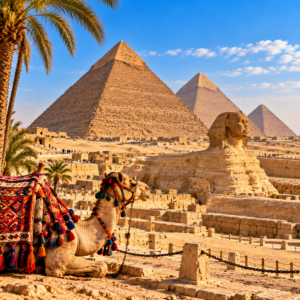
The Pyramids of Giza are among the most recognizable monuments in the world, but their importance goes far beyond their enormous size. Built more than 4,500 years ago, they formed part of a royal burial landscape that included temples, smaller pyramids, tombs, and ceremonial structures. Understanding this wider complex makes a visit much more rewarding than simply seeing three pyramids from a distance.
Located on the western edge of Greater Cairo, the Giza Plateau brings together three principal pyramids, the Great Sphinx, and numerous archaeological remains associated with ancient Egyptian kings and their royal families.
For first-time visitors, the main questions are often straightforward: What is the difference between the three pyramids? Why were they built? What else is there to see? Can you enter the monuments? And how much time should you allow to explore the area?
This guide explains the history, architecture, main attractions, practical arrangements, and important details to understand before visiting the Pyramids of Giza.
What Are the Pyramids of Giza?
The Pyramids of Giza are three major royal pyramids built during Egypt’s Fourth Dynasty in the Old Kingdom period. They were constructed for three successive generations of rulers: Khufu, his son Khafre, and his grandson Menkaure.
The Great Pyramid of Khufu is the largest and oldest of the three. Khafre’s pyramid stands on slightly higher ground, making it appear nearly as tall as the Great Pyramid. Menkaure’s pyramid is smaller, but it forms an essential part of the original royal landscape.
The pyramids were not isolated structures. Each belonged to a larger complex that included temples, subsidiary pyramids, tombs, and connecting causeways. These features were associated with royal burial practices and the religious beliefs surrounding the king’s afterlife.
The plateau also contains the Great Sphinx, mastaba tombs, and other archaeological remains that help explain how the area functioned as a royal necropolis.
The Egyptian Ministry of Tourism and Antiquities identifies the three main pyramids as the burial places of Khufu, Khafre, and Menkaure, whose reigns belong to the Fourth Dynasty, approximately 2613–2494 BC.
Where Are the Pyramids of Giza Located?
The Pyramids of Giza are in Giza Governorate, within the Greater Cairo metropolitan area. They stand on a limestone plateau west of the Nile Valley, overlooking a landscape that has changed significantly since the monuments were constructed.
Although the pyramids are often described as being outside Cairo, they are accessible from many parts of the metropolitan area. The actual journey depends on your accommodation, traffic, and chosen transportation.
The plateau is also close enough to other Giza attractions to make a combined sightseeing day possible, although you should allow sufficient time for transportation and entry arrangements.
If your trip is focused on ancient Egyptian history, the pyramids can serve as the starting point for exploring other archaeological areas, including Saqqara and Dahshur. These are separate sites and require additional planning.
How Old Are the Pyramids of Giza?
The main pyramids were constructed during the Fourth Dynasty of ancient Egypt, more than 4,500 years ago.
The Great Pyramid was built for King Khufu, who ruled approximately 2589–2566 BC. His son Khafre constructed the second pyramid, while Menkaure, Khafre’s son and Khufu’s grandson, built the third.
Their survival across thousands of years is one of the most remarkable aspects of the Giza Plateau. Although the monuments have lost much of their original outer casing and have experienced erosion and other changes, their core structures remain visible today.
The pyramids also provide evidence of the organization and resources available to the Egyptian state during the Old Kingdom. Their construction required quarrying, transporting, and positioning enormous quantities of stone, as well as coordinating workers, supplies, and supporting infrastructure.
The precise methods used to construct every part of the pyramids remain subjects of archaeological investigation. It is therefore better to distinguish established archaeological evidence from popular theories that lack sufficient evidence.
Why Were the Pyramids of Giza Built?
The pyramids were royal tombs associated with ancient Egyptian beliefs about death, kingship, and the afterlife.
In ancient Egyptian religion, death was not necessarily understood as the end of existence. Royal burial practices were connected with the king’s continued existence after death and his relationship with the gods.
The pyramid was the most visible part of a larger religious and funerary complex. Temples provided spaces for rituals and offerings, while causeways connected different parts of the complex. Smaller pyramids and surrounding tombs were associated with royal family members and other individuals.
The structures therefore served more than one purpose within the broader religious system.
Their scale also reflected the power and resources of the royal state. Organizing such extensive construction required skilled workers, materials, planning, and administration.
When you visit the plateau, look beyond the three main pyramids. The surrounding remains help explain why the site was designed as a complete royal landscape rather than simply a collection of enormous stone buildings.
The Three Main Pyramids of Giza
Each pyramid has its own architectural characteristics and historical significance.
The Great Pyramid of Khufu
The Great Pyramid is the largest pyramid at Giza and the most famous of the three.
It was originally approximately 146.5 meters tall. Over time, the loss of its outer casing and uppermost portion reduced its height. For roughly 3,800 years, it remained the tallest human-made structure in the world.
The pyramid was constructed primarily from local limestone, while its original exterior casing used high-quality limestone brought from Tura, south of modern Cairo.
Its interior contains several chambers and passages, including the Grand Gallery and the King’s Chamber. The stone sarcophagus associated with Khufu’s burial remains inside the King’s Chamber.
The interior is architecturally interesting, but it is very different from the decorated tombs found elsewhere in Egypt. Visitors should not expect painted walls covering every surface.
The Great Pyramid is also the only surviving member of the traditional Seven Wonders of the Ancient World.
The Pyramid of Khafre
The Pyramid of Khafre is the second-largest pyramid on the plateau.
Because it stands on higher ground, it can appear nearly as tall as the Great Pyramid, even though its original height was slightly lower. Some of its original casing stones remain visible near the summit, making it easier to imagine how the monument looked when its exterior was covered with polished limestone.
Khafre’s pyramid complex is especially important because of its relationship with the Great Sphinx and the nearby valley temple.
The temple remains include large stone blocks and architectural features that demonstrate the scale and sophistication of royal construction during the Fourth Dynasty.
For visitors interested in how the pyramids, temples, and Sphinx fit together, Khafre’s complex deserves particular attention.
The Pyramid of Menkaure
Menkaure’s pyramid is the smallest of the three principal pyramids at Giza.
Its original height was approximately 65 meters. Although smaller than the other two, it remains an important part of the plateau’s royal history.
One distinctive feature is its use of granite in the lower portion of the exterior casing. The granite came from Aswan, far to the south, and was more difficult to transport and work than limestone.
Smaller pyramids associated with royal women stand nearby, further demonstrating that the site contained a broader royal burial landscape.
Menkaure’s pyramid is worth seeing alongside the other two because the three monuments illustrate how royal pyramid complexes developed within the same historical period.
What Is the Great Sphinx of Giza?
The Great Sphinx is one of the most recognizable monuments in ancient Egypt. It combines a lion’s body with a human head and was carved directly from the natural limestone bedrock.
The Sphinx is generally associated with the reign of Khafre, although archaeological interpretation relies on evidence from the surrounding complex rather than on a surviving inscription that definitively identifies its builder.
In ancient Egyptian symbolism, the lion’s body represented strength and royal power. The monument’s location near Khafre’s valley temple and causeway is an important part of the evidence connecting it with his pyramid complex.
The Sphinx has also played a role in Egyptian religious history long after the Old Kingdom. During the New Kingdom, it became associated with the sun god in the form known as Horemakhet, or Horus in the Horizon.
A visit to the Sphinx adds another dimension to the plateau. It helps show how royal monuments and religious symbolism were connected within ancient Egyptian society.
What Else Can You See at the Giza Plateau?
The three pyramids dominate the landscape, but they are only part of the archaeological complex.
Queens’ pyramids
Smaller pyramids associated with royal women stand near the main pyramids. Their presence shows that royal burial arrangements extended beyond the king’s principal monument.
Temples and causeways
The pyramid complexes included funerary temples near the pyramids and valley temples closer to the Nile Valley. Causeways connected these areas, forming part of the ritual landscape.
Some temple remains are particularly important for understanding the construction and organization of the royal complexes.
Mastaba tombs
Mastabas are rectangular tomb structures associated with members of the royal family, officials, and other individuals.
Their presence around the pyramids reveals that Giza served as a wider cemetery for people connected with the royal court, rather than as a burial place reserved exclusively for kings.
Archaeological remains
The plateau contains additional structures and remains associated with ancient Egyptian burial practices, boat burials, and the daily activities that supported royal funerary institutions.
You do not need to understand every archaeological feature before arriving. However, knowing that the pyramids belong to a larger complex will help you appreciate what you see.
Can You Go Inside the Pyramids of Giza?
Yes, visitors can enter certain pyramids when access is available and the appropriate ticket has been purchased.
The Great Pyramid is the best-known option, but its interior experience is quite different from walking around the exterior.
The passages can be narrow, steep, and physically demanding. Inside, visitors encounter the pyramid’s internal architecture, including passages leading toward the King’s Chamber.
The interior does not offer the colorful wall paintings found in many Egyptian tombs. Its significance lies mainly in the engineering, layout, and construction of the monument.
Entry is not essential to enjoying the plateau. If you prefer not to enter, you can still explore the pyramids from outside, view the Sphinx, and learn about the site.
Interior access requires separate admission from general plateau entry, and the available options and prices may change. Check the official ticket information before making plans.
What Is the Best Time to Visit the Pyramids of Giza?
The cooler months are generally more comfortable for exploring the plateau, particularly if you plan to spend several hours outdoors.
From autumn through spring, temperatures are usually more manageable than during the hottest part of summer. Winter mornings can feel cool, while summer afternoons can be extremely hot.
The plateau includes open areas with limited shade, so weather affects how comfortably you can walk between monuments.
Morning visits are often a good choice because they provide more time before the strongest heat of the day. They can also leave room for other activities later, depending on traffic and your schedule.
If you visit during summer, carry water, wear sun protection, and plan breaks. Avoid assuming that every part of the site can be explored comfortably in the middle of the day.
How Much Time Should You Spend at the Pyramids?
For most first-time visitors, three to five hours is a reasonable starting point for exploring the principal monuments.
A shorter visit may be sufficient if you mainly want to see the pyramids from outside and take photographs. More time may be needed if you enter a pyramid, explore the wider plateau, hire a guide, or stop at several viewpoints.
A useful approach is to prioritize the main pyramid area and the Sphinx before deciding whether to add other activities.
If you want to visit Saqqara, Dahshur, or a museum on the same day, remember that these are separate stops. Transportation, traffic, and ticket arrangements can make the overall day considerably longer.
How Much Do Tickets to the Pyramids of Giza Cost?
Ticket prices depend on visitor category and the areas you intend to enter.
The Egyptian Ministry of Tourism and Antiquities currently lists the following general plateau admission prices for foreign visitors:
| Ticket | Listed adult price |
|---|---|
| Giza Plateau admission | EGP 700 |
| Great Pyramid interior | EGP 1,000 |
The Great Pyramid interior ticket is separate from general area admission, so the two costs should not be confused.
These prices reflect the official listing available at the time of writing and may change. Student rates, eligibility conditions, and access to individual monuments can differ.
Before visiting, check the official Ministry of Tourism and Antiquities ticketing website:
Choose the Giza Plateau listing and read the ticket descriptions carefully. Confirm the current price, opening hours, and whether the monument you want to enter is accessible on your planned date.
How Do You Get to the Pyramids of Giza?
The pyramids can be reached from many parts of Greater Cairo, but the most suitable transportation method depends on your starting point and travel preferences.
A private transfer can be convenient if you want a direct journey and a planned return. Taxis and ride-hailing services can also work, depending on local availability and your pickup location.
Organized tours may include transportation and a guide, but you should check exactly what the price covers.
Public transportation may be suitable for independent travelers, although the final part of the journey can require additional transport.
The main consideration is traffic. Do not plan your day around a journey time calculated only from the distance on a map.
Confirm the current visitor entrance and drop-off instructions before leaving your hotel, especially if you are using a driver or arranging an independent visit.
What Should You Wear and Bring?
The pyramids involve walking across exposed ground, and some routes can be uneven.
Comfortable walking shoes are useful, particularly if you intend to explore more than the main viewing areas. Lightweight clothing, a hat, sunglasses, and sunscreen can make a major difference in warmer weather.
Consider bringing:
- Drinking water
- Sun protection
- Comfortable walking shoes
- A charged phone or camera
- A portable battery
- Your tickets and any required identification
- A light layer during cooler months
Choose clothing appropriate for the season and respectful of local customs.
If you intend to enter a pyramid, consider the narrow passages and steep sections before deciding whether the experience is right for you.
Is a Guide Worth Hiring?
A guide can help you understand the history and layout of the plateau, especially if this is your first visit to Egypt.
Without explanation, it can be difficult to distinguish the purpose of different structures or understand how the temples, causeways, pyramids, and surrounding tombs relate to one another.
A knowledgeable guide can also help organize your route and focus attention on the most important features when time is limited.
However, a guided tour is not essential. Independent visitors can explore the site at their own pace and read about the monuments beforehand.
If you choose a tour, confirm the meeting point, duration, transportation arrangements, guide services, and whether admission tickets are included.
Can You Visit the Pyramids With Children?
Families can visit the Giza Plateau, but the experience is easier with a realistic schedule.
Walking distances, uneven ground, heat, and limited shade can be tiring for younger visitors. Plan breaks, carry water, and avoid trying to cover every part of the site in one visit.
Entering a pyramid is a separate decision because the passages may be narrow and steep. Consider each family member’s comfort and mobility before purchasing an interior ticket.
For families, a shorter visit focused on the main pyramids and the Sphinx may be more enjoyable than a tightly scheduled full day.
What Should You Know Before Visiting?
A few practical decisions can prevent common problems.
First, confirm the current opening hours and ticket conditions before departure. Information on older travel websites may no longer match the official arrangements.
Second, understand what your ticket includes. General admission does not automatically cover entry into the Great Pyramid or every other monument.
Third, agree on prices before accepting optional services such as rides or guided activities. You can politely decline offers you do not want.
Finally, follow the designated visitor routes and site instructions. Climbing monuments or entering restricted areas can be dangerous and may be prohibited.
The best visit is one where you have enough time to explore the monuments without feeling pressured to accept every activity offered around the site.
Frequently Asked Questions About the Pyramids of Giza
How many pyramids are there at Giza?
The three principal pyramids are those of Khufu, Khafre, and Menkaure. The plateau also contains smaller pyramids associated with royal women and other members of the royal family.
Which is the largest pyramid at Giza?
The Great Pyramid of Khufu is the largest of the three main pyramids. Its original height was approximately 146.5 meters.
Which pyramid is the oldest?
The Great Pyramid of Khufu is the oldest of the three principal Giza pyramids.
Who built the Great Pyramid?
The Great Pyramid was built for King Khufu during the Fourth Dynasty of ancient Egypt, approximately 2589–2566 BC.
Why does Khafre’s pyramid look almost as tall as the Great Pyramid?
Khafre’s pyramid stands on slightly higher ground. Although its original height was lower, its position makes it appear nearly as tall from some viewpoints.
Is the Great Sphinx part of the pyramid complex?
Yes. The Great Sphinx is closely associated with Khafre’s pyramid complex and stands near the valley temple and causeway.
Can you see all three pyramids in one visit?
Yes. The three main pyramids are part of the same archaeological plateau, and visitors can see them during a single visit. The time required depends on walking pace and which areas are open.
Do you need a separate ticket to enter a pyramid?
Yes. General plateau admission does not automatically include interior access. Check the official ticket listing for the pyramid you want to enter.
Are the Pyramids of Giza worth visiting?
For travelers interested in ancient history, architecture, or Egyptian culture, the pyramids are one of the country’s most significant attractions. Understanding the wider archaeological complex makes the visit more meaningful.
Can you visit the pyramids and the Sphinx on the same day?
Yes. They are part of the same general archaeological experience, although the exact route and access arrangements should be confirmed before visiting.
Final Takeaway: Understanding the Pyramids of Giza
The Pyramids of Giza are much more than three monumental structures. They are part of a royal landscape shaped by ancient Egyptian beliefs, engineering, political power, and burial traditions.
The Great Pyramid of Khufu demonstrates the extraordinary scale of Old Kingdom construction. Khafre’s complex connects the pyramids with the Great Sphinx and its temples, while Menkaure’s smaller pyramid adds another chapter to the history of royal burial architecture.
Before visiting, learn the differences between the three monuments, check the current ticket arrangements, and allow enough time to explore beyond the most familiar viewpoints.
You do not need to enter a pyramid or hire a guide to appreciate the plateau. What matters most is understanding that the monuments belong to a larger archaeological complex whose history extends well beyond the photographs that made it famous.
With a little preparation, a visit to Giza can become one of the most informative and memorable parts of a trip to Egypt.