
How to Use Public Transportation in Cairo
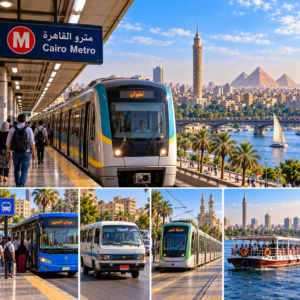
Getting around Cairo can feel complicated at first. The Egyptian capital is enormous, traffic can be unpredictable, and several types of transportation operate side by side. However, once you understand how the metro, public buses, microbuses, and ride-hailing services work together, exploring the city becomes much easier.
Public transportation in Cairo can help you reach central neighborhoods, historic attractions, shopping districts, railway stations, and many areas of Greater Cairo without relying on a private car for every journey. The key is choosing the right option for each trip. The metro is particularly useful for avoiding road traffic, while buses and microbuses can connect you to places farther from the railway network.
For first-time visitors, a practical approach is to use the metro for straightforward journeys, check a route-planning app before taking a bus or microbus, and use a ride-hailing service when a destination is difficult to reach by public transport.
This guide explains how to use Cairo’s main transportation options, pay fares, plan routes, and travel more confidently around the city.
What Are the Main Types of Public Transportation in Cairo?
Cairo has several transportation options, but they do not all work in the same way. Some have clearly marked stations and ticket systems, while others depend more on local knowledge.
| Transportation | Best for | What to know |
|---|---|---|
| Cairo Metro | Traveling between major districts while avoiding road traffic | Buy a ticket based on the distance of your journey |
| Public buses | Reaching areas not directly served by the metro | Check the route, destination, and current fare before boarding |
| Microbuses | Local connections and routes through busy neighborhoods | Confirm the destination and where to get off before paying |
| Ride-hailing apps | Direct trips, late journeys, or places far from stations | Check the pickup point, destination, and fare estimate |
| Regular taxis | Short trips and areas where a taxi is readily available | Agree on the fare or confirm that the meter is running |
| Walking | Exploring compact areas and reaching nearby landmarks | Check crossing points and allow extra time in busy streets |
For most visitors, the metro is the easiest public transportation system to learn first. Buses and microbuses can be useful once you become familiar with local routes or have reliable directions.
1. How to Use the Cairo Metro
The Cairo Metro is one of the most useful ways to travel around the city, particularly when traffic is heavy. Its lines connect central Cairo with parts of Giza and other urban districts.
Buy the correct metro ticket
At the station, go to the ticket office and tell the attendant your destination. The fare depends on the number of stations covered by your journey, so check the current fare categories before purchasing your ticket.
As of 2026, the published standard public fares are:
| Journey distance | Standard fare |
|---|---|
| Up to 9 stations | EGP 10 |
| Up to 16 stations | EGP 12 |
| Up to 23 stations | EGP 15 |
| Up to 39 stations | EGP 20 |
These are published metro fares, not prices for buses, microbuses, or other transport services. Fares can change, so confirm them at the station or through official metro information before traveling.
Keep your ticket until you have exited the station. Follow the signs to the correct platform and check the direction of the train before boarding.
Understand the metro lines and transfers
The metro network has several lines, with interchange stations that allow passengers to change between them. Two particularly useful transfer stations are Sadat and Al Shohadaa, which connect Lines 1 and 2. Attaba connects Lines 2 and 3.
Some stations are useful starting points for sightseeing:
- Sadat: Near Tahrir Square and the Egyptian Museum.
- Al Shohadaa: Connects with the Ramses railway station area.
- Mar Girgis: Useful for visiting Coptic Cairo.
- Opera: Near the Cairo Opera House and the Nile-side area.
- Giza: Near Giza Railway Station, with onward transport options toward the pyramids.
Remember that a metro station is not always directly beside the attraction you want to visit. You may need to walk or take another form of transport for the final part of the journey.
For station-by-station instructions, see our separate guide: Cairo Metro Guide for Tourists.
Check operating hours
The official Cairo Metro passenger information lists regular operating hours as approximately 5:00 AM to midnight, with different hours during Ramadan. Service patterns and the last train can vary, so check the current timetable if you plan to travel late at night.
During busy commuting periods, trains and stations can be crowded. Keep your belongings secure, allow extra time for transfers, and follow station signs rather than rushing through the crowds.
2. Using Public Buses in Cairo
Public buses serve many areas that are not directly accessible by metro. They can be useful for reaching residential districts, connecting neighborhoods, or completing journeys that would otherwise require several transfers.
However, the bus network can be less straightforward for a visitor than the metro. Routes, stops, payment methods, and service availability differ, and not every bus stop provides clear English-language information.
How to take a public bus
Before leaving, identify the bus route and the stop closest to your destination. Use a route-planning app, ask your hotel or a trusted local contact for guidance, or confirm the route with transport staff where available.
When you reach the stop:
- Check the bus number and destination before boarding.
- Confirm the fare and accepted payment method.
- Ask where you should get off if the stop names are unfamiliar.
- Follow your route on a map during the journey.
- Be ready to exit before the bus reaches your stop.
Do not assume that every bus accepts the same payment method. Cairo has been introducing electronic fare collection on parts of its public bus fleet, but the rollout is not necessarily identical across all services. Carry some small Egyptian-pound notes and coins as a backup, while checking the specific bus’s current payment rules.
Are buses good for tourists?
Buses can be economical, but they may require more preparation than the metro. They are most useful when you already know the route or when an app provides reliable stop-by-stop directions.
If you are visiting Cairo for only a day or two, the metro combined with walking and occasional ride-hailing trips may be simpler. If you are staying longer, learning a few useful bus routes can give you more flexibility.
3. How to Use Microbuses in Cairo
Microbuses are a familiar sight across Greater Cairo. These shared minibuses follow local routes and can connect neighborhoods, main roads, transport hubs, and districts that are not convenient to reach by metro.
They are popular with residents because they provide flexible local connections. For visitors, however, the biggest challenge is knowing which vehicle to take and where to get off.
How microbuses work
Unlike a metro train, a microbus may not have a clearly marked station or an easy-to-understand route map at every stop. Drivers and passengers often identify routes by neighborhood names, major roads, or well-known landmarks.
If you want to use one:
- Find out the route before boarding.
- Confirm the destination with the driver or conductor.
- Ask whether the vehicle passes your intended landmark.
- Check the fare before the journey.
- Keep track of your location so you do not miss your stop.
A route-planning app that includes local microbus information can be especially helpful. Still, treat route data as a guide rather than a guarantee; some routes or stop details may be incomplete or change over time.
Should tourists use microbuses?
Microbuses can be useful for confident travelers who are comfortable asking questions and following local directions. They are less convenient if you need predictable journey instructions or are unfamiliar with Cairo’s neighborhoods.
For your first trip, consider using the metro or a ride-hailing service until you understand the local transport network. You can try a microbus later for a short, straightforward route.
4. Use Apps to Plan Your Journey
Planning is often the difference between a smooth trip and a confusing one. Cairo’s transport network includes several services, and a single journey may involve walking to a station, taking the metro, changing lines, and using another vehicle for the final stretch.
A route-planning app can help you compare options before leaving your hotel.
Useful transport tools
Official Cairo Metro app: The metro operator provides an official app for metro network information in Arabic and English. It is useful for checking stations and planning metro journeys.
Google Maps: Useful for locating attractions, finding nearby metro stations, and navigating on foot. Public transport coverage and stop-level directions may vary by route.
Local public transportation apps: Apps such as Tareeqi and other independent Cairo transit planners may provide combinations of metro, bus, minibus, microbus, and walking directions. Check the app’s coverage and recent updates, and verify important details before boarding.
A practical way to plan a trip is to enter your starting point and destination, compare the suggested routes, and choose one with a manageable number of transfers. Save the destination’s name in both English and Arabic if possible, particularly if you expect to ask a driver or local passenger for help.
5. How Much Does Public Transportation Cost in Cairo?
The cost depends on the transport type, journey length, and current fare rules. The metro has published distance-based fares, while bus and microbus prices vary by service and route.
For metro journeys, the standard fares published for 2026 range from EGP 10 to EGP 20, depending on the number of stations. Do not use these amounts to estimate bus, microbus, or taxi fares.
To keep your transportation budget under control:
- Use the metro for journeys it serves directly.
- Check bus fares and payment requirements before boarding.
- Confirm the microbus fare before setting off.
- Compare the total cost of a multi-stage journey with a direct ride-hailing trip.
- Keep small cash denominations available for services that require cash.
- Recheck fares if you return to Cairo after an extended period.
A low fare does not always mean the fastest journey. If you need several transfers or have luggage, a direct ride may be more practical even if it costs more.
6. Getting to Cairo’s Main Attractions by Public Transport
Public transportation can take you close to many important sights, but the most convenient route depends on where you are staying and which attraction you want to visit.
| Destination | Useful transport approach |
|---|---|
| Egyptian Museum and Tahrir Square | Take the metro to Sadat, then walk toward your destination |
| Coptic Cairo | Use Mar Girgis metro station for access to the historic area |
| Ramses railway station | Travel to Al Shohadaa metro station |
| Cairo Opera House | Use Opera station and follow local signs |
| Central Cairo | Choose a suitable metro station, then walk or use a short onward ride |
| Giza Pyramids | Combine metro or another suitable route with onward transport; the pyramids do not have a metro station at the entrance |
| Newer districts and destinations outside the metro network | Check buses, local transport, or a direct ride-hailing trip |
Always check the exact location of your attraction before choosing a station. Large areas such as Giza can cover considerable distances, and the nearest metro station may still leave you needing another vehicle.
For more detailed directions to the pyramids, read Cairo Airport to the Pyramids: Complete Guide and How to Visit the Pyramids of Giza: Complete Visitor Guide.
7. Safety and Etiquette on Public Transportation
Millions of journeys take place across Greater Cairo every day, and visitors can use public transportation successfully by staying aware and preparing in advance.
A few simple precautions make the experience easier:
- Keep valuables secure. Carry your phone and wallet where you can keep an eye on them, particularly in crowded stations and vehicles.
- Watch your belongings when boarding. Crowds can build quickly at popular stations and stops.
- Follow local signs and instructions. Metro staff can help direct you to platforms, ticket offices, and exits.
- Respect designated seating and carriages. Observe signs for women-only metro cars and choose the appropriate carriage.
- Avoid relying on the last service. Leave a margin before the published closing time, especially when a journey requires a transfer.
- Confirm your stop. This is particularly important on buses and microbuses, where stop announcements may not be familiar.
- Stay alert when crossing roads. Busy streets may have fast-moving traffic, and the nearest crossing may not be directly outside the station.
- Have a backup plan. Keep your destination saved offline or written down in case your phone battery runs low.
If you are traveling with heavy luggage, young children, or someone who has difficulty walking, consider how much walking and how many transfers a public transport route requires before choosing it.
8. Common Mistakes to Avoid
First-time visitors can save time by avoiding a few predictable problems.
Assuming the metro goes everywhere. The network is useful, but many destinations require a walk or another vehicle after you leave the station.
Boarding a microbus without confirming its route. Check the destination and ask where to get off before paying.
Expecting every service to accept card payments. Payment systems differ by operator and service. Confirm the method before boarding and keep a small cash backup.
Underestimating traffic and transfer time. A short distance on the map may take longer than expected. Allow extra time, particularly during busy periods.
Waiting until the last minute to plan the return journey. Check operating hours and transport availability before visiting an attraction far from your accommodation.
Confusing the nearest station with the entrance. Large attractions and districts may be some distance from the metro station. Check the final walking or driving leg as well.
9. A Simple Public Transportation Plan for First-Time Visitors
If you are new to Cairo, start with the easiest routes and build your confidence gradually.
On your first day: Use the metro for a journey between two well-connected stations, such as Sadat and Al Shohadaa, so you can learn how ticketing, platforms, and transfers work.
When visiting central attractions: Check whether the metro brings you close enough to walk. For places such as the Egyptian Museum or Coptic Cairo, the appropriate station can reduce the amount of time spent in road traffic.
For destinations outside the metro network: Compare a bus route with a direct ride-hailing journey. Choose the option that fits your budget, time, and comfort level.
For later trips: Try a bus or microbus route only after checking the stops and destination in advance. Save routes that work well for your accommodation and the places you visit most often.
The goal is not to use every type of transport during your stay. It is to combine the options that make each journey manageable.
Final Thoughts
Using public transportation in Cairo becomes easier when you understand what each option does best. The metro is a useful starting point for reaching major districts and avoiding road traffic. Public buses can extend your reach, while microbuses provide local connections that may be less familiar to visitors. Ride-hailing services offer a more direct alternative when public transport involves too many transfers.
Before every journey, check the route, confirm the fare and payment method, and leave enough time for walking or changing vehicles. With a little preparation, public transportation can help you explore Cairo more flexibly and spend less time worrying about how to get from one place to another.