
Bent Pyramid Egypt: History and Visitor Guide
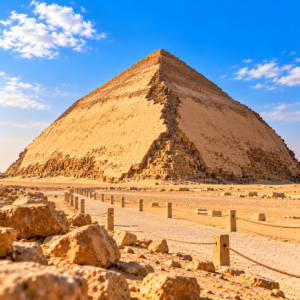
The Bent Pyramid in Egypt is one of the most unusual ancient monuments in the country. Located at Dahshur, south of Cairo, it stands out because its sides change angle partway up, creating a distinctive shape that looks different from the familiar pyramids at Giza.
Built for King Sneferu during the Fourth Dynasty, the Bent Pyramid represents an important stage in the development of ancient Egyptian pyramid architecture. Its unusual profile provides clues about the challenges faced by builders as they experimented with new ways to construct monumental royal tombs.
Dahshur is also home to the Red Pyramid, another major monument associated with Sneferu. Visiting both pyramids gives travelers a better understanding of how pyramid design developed before the construction of the Great Pyramid of Giza.
Whether you are interested in ancient history, architectural details, photography, or exploring archaeological sites beyond Cairo’s busiest attractions, the Bent Pyramid deserves a place on your Egypt itinerary.
This guide covers the pyramid’s history, why its shape changes, what you can see inside, ticket prices, opening hours, transportation, and practical tips for planning your visit.
Where Is the Bent Pyramid in Egypt?
The Bent Pyramid is located at Dahshur, an archaeological area south of Cairo in the wider Memphis necropolis. The site contains royal pyramids from different periods of ancient Egyptian history, including several monuments associated with the Old Kingdom.
Dahshur is particularly important because it preserves evidence of the experimentation that took place during the early development of true pyramids. The Bent Pyramid and Red Pyramid are the area’s two best-known monuments, and they are close enough to visit during the same excursion.
Compared with the main pyramid complex at Giza, Dahshur is often a quieter option for travelers who want to focus on ancient architecture without spending the entire day at a major tourist attraction.
The journey from Cairo is usually arranged by private car, taxi, or organized tour. If you plan to use public transportation, research the route and return options before leaving the city.
What Is the Bent Pyramid?
The Bent Pyramid is a royal pyramid built for King Sneferu, the first king of Egypt’s Fourth Dynasty. Its name comes from the unusual profile created by a change in the angle of its sides.
The lower section rises at a steep angle, while the upper section becomes noticeably shallower. This gives the monument a distinctive outline that separates it from the more regular pyramids most visitors recognize.
The structure is historically significant because it reflects a period when Egyptian builders were developing and refining the techniques required to create large, smooth-sided pyramids.
Rather than viewing the Bent Pyramid simply as a failed construction project, it is more useful to understand it as evidence of architectural experimentation. Its unusual shape preserves a visible record of changes made during construction.
The nearby Red Pyramid represents another important stage in this development and helps place the Bent Pyramid in the wider history of Egyptian pyramid building.
Why Is the Bent Pyramid Bent?
The Bent Pyramid began with a steep slope of approximately 55 degrees. During construction, the angle was reduced to around 43 degrees, creating the change in profile visible today. The Ministry of Tourism and Antiquities describes this adjustment as a response to concerns about the stability of the structure under the weight of its masonry.
The precise circumstances behind every construction decision remain a matter of archaeological interpretation, but the change in angle is one of the monument’s most recognizable features.
An Important Experiment in Pyramid Design
Building a large pyramid was an enormous engineering undertaking. The structure had to support the weight of millions of stone blocks while maintaining its intended shape over time.
The Bent Pyramid demonstrates that the builders were still refining their approach to this challenge. The alteration in slope changed the overall proportions of the monument and helped produce the unusual shape that survives today.
How the Bent Pyramid Influenced Later Pyramids
The Bent Pyramid is part of the broader story of how ancient Egyptians moved from earlier stepped structures toward the smooth-sided pyramids that became symbols of royal power.
King Sneferu’s building projects included several major pyramids. The Red Pyramid at Dahshur is particularly important because it demonstrates a more regular smooth-sided design.
For visitors, seeing these monuments together makes the architectural progression easier to understand. The Bent Pyramid is not just an unusual landmark; it is a key part of the history behind Egypt’s most famous pyramids.
Who Built the Bent Pyramid?
The Bent Pyramid was commissioned by King Sneferu, who ruled during the Fourth Dynasty of ancient Egypt. His reign is closely associated with major advances in pyramid construction.
Sneferu’s pyramid projects show that early royal architects were exploring different designs and construction methods. The Bent Pyramid preserves evidence of one approach, while the Red Pyramid demonstrates another.
Sneferu was also the father of Khufu, the king for whom the Great Pyramid at Giza was built. This connection makes the Dahshur pyramids especially relevant to visitors who plan to see Giza later in their trip.
The monuments help explain the architectural background against which the great pyramids of the Giza Plateau were developed.
What Makes the Bent Pyramid Unique?
Several features make the Bent Pyramid stand out from other ancient Egyptian monuments.
1. Its Distinctive Shape
The change in slope gives the pyramid an unmistakable profile. From a distance, the transition between the lower and upper sections is easy to see, making it particularly interesting for photographers and travelers studying pyramid architecture.
2. Surviving Limestone Casing
The Bent Pyramid retains substantial sections of its original outer limestone casing. This material once formed a smooth exterior surface, helping the monument look different from the rougher stone surfaces visible on many other pyramids today.
The surviving casing provides a useful visual reminder that ancient pyramids originally had finished exteriors rather than the exposed core masonry often seen in modern photographs.
3. Two Entrances
The Bent Pyramid has two entrances: one on its northern side and another high on its western side. According to the Ministry of Tourism and Antiquities, the entrances lead to internal chambers with corbelled ceilings.
The northern entrance leads to a chamber below ground level, while the western entrance leads to a chamber positioned higher within the pyramid’s body.
These internal arrangements make the monument particularly interesting to anyone studying the design of ancient royal tombs.
4. Its Connection to the Red Pyramid
The Red Pyramid stands nearby and is also associated with Sneferu. Together, the two structures illustrate an important period in the development of pyramid architecture.
If you have time for both monuments, compare their exterior shapes and consider how the differences reflect the experimentation taking place during Sneferu’s reign.
Can You Go Inside the Bent Pyramid?
Interior access arrangements can change, so check the current official information before your visit. When access is available, entering the Bent Pyramid offers a different experience from viewing it from outside.
The pyramid has two entrances, and its internal passages lead to chambers with distinctive corbelled roofs. These ceilings are formed by layers of stone that project inward as they rise, producing a shape similar to an inverted staircase.
What Is the Interior Like?
The internal layout is not like a modern museum or an open visitor attraction. It consists of narrow passages and chambers designed as part of the ancient monument.
Visitors should expect a physically demanding experience if interior access is permitted. Moving through confined spaces may involve bending, climbing, or navigating steep sections.
Before entering, consider whether you are comfortable with:
- Narrow passages and enclosed spaces.
- Steep or uneven steps.
- Bending forward for extended periods.
- Physical exertion in a historic structure.
Wear shoes with a secure grip, carry only essential belongings, and follow all instructions from site staff.
If you have mobility limitations or feel uncomfortable in confined spaces, enjoying the pyramid from outside may be the better choice.
Is It Worth Visiting Without Going Inside?
Yes. The Bent Pyramid is worth seeing even if you do not enter it.
Its unusual shape, surviving casing, and historical importance make it one of the most distinctive pyramids in Egypt. The exterior alone provides plenty to observe, especially if you compare it with the Red Pyramid during the same trip.
Do not make interior access the only reason for visiting. Plan around the monument’s architectural and historical value, and treat entry as an additional experience if it is available.
Bent Pyramid vs. Red Pyramid
The Bent Pyramid and Red Pyramid are the main attractions at Dahshur. Both were built for King Sneferu, but their shapes reveal different stages in the development of pyramid design.
| Feature | Bent Pyramid | Red Pyramid |
|---|---|---|
| Defining feature | Change in slope partway up | More regular smooth-sided design |
| Exterior appearance | Distinctive bent profile, with surviving casing | Reddish exposed stone |
| Historical importance | Evidence of architectural experimentation | One of the earliest successful true pyramids |
| Interior layout | Two entrances leading to internal chambers | Northern entrance leading to a series of galleries and chambers |
| Best for | Understanding changes in pyramid design | Exploring the development of the smooth-sided pyramid |
For most travelers, visiting both is the best way to understand why Dahshur is so important. The Bent Pyramid shows a change in design, while the Red Pyramid demonstrates a more regular form.
If you have only a short time, choose based on your interests. The Bent Pyramid is especially compelling for its shape, while the Red Pyramid may appeal more to visitors interested in its interior chambers.
Bent Pyramid Ticket Prices and Opening Hours
Before traveling to Dahshur, check the Ministry of Tourism and Antiquities website and the official electronic ticketing portal for current information.
The Ministry’s official Dahshur listing currently displays the following general admission prices:
| Visitor category | Published admission price |
|---|---|
| Foreign adult | EGP 200 |
| Foreign student | EGP 100 |
| Egyptian adult | EGP 10 |
| Egyptian student | EGP 5 |
These are the published prices for admission to the Dahshur archaeological site. Confirm the current rates, student eligibility rules, and any additional charges before your visit.
The Ministry’s Bent Pyramid page lists opening hours of 8:00 AM to 5:00 PM. However, entry arrangements and access to individual monuments can change. Arriving earlier in the day gives you more flexibility.
Official resources:
- Ministry of Tourism and Antiquities — The Bent Pyramid
- Ministry of Tourism and Antiquities — Dahshur
- Official Dahshur ticket booking portal
If you intend to enter the pyramid, confirm whether the interior is open on your travel date. Do not assume that access is guaranteed simply because the archaeological site itself is open.
How to Get to the Bent Pyramid from Cairo
Dahshur is located south of Cairo, away from the main central sightseeing areas. Transportation is therefore an important part of planning your visit.
Private Driver
A private driver is one of the simplest ways to visit the Bent Pyramid. You can agree on a departure time, explore at your own pace, and combine Dahshur with the Red Pyramid or other archaeological sites.
Before setting out, confirm the fare, waiting time, and planned stops. If you intend to visit Saqqara or Memphis as well, make sure the driver understands the full itinerary.
Guided Tour
An organized tour can simplify transportation and provide historical context. Some tours combine Dahshur with Saqqara and Memphis, allowing visitors to explore several important sites in one day.
Before booking, check whether the price includes entrance tickets, a guide, transportation, and any additional services. These items may be priced separately.
Taxi or Ride-Hailing Service
A taxi or ride-hailing service may work for the journey from Cairo, depending on local availability. However, arranging the return journey in advance is important because you should not assume a car will be readily available at the archaeological site.
Agree on a return pickup or arrange for your driver to wait while you explore.
Public Transportation
Public transportation may be possible, but it can involve multiple stages and a final local transfer. This option usually requires more planning and can be inconvenient if you are unfamiliar with the area.
If you are visiting Cairo for only a few days, a private driver or organized tour may make better use of your time.
Best Time to Visit the Bent Pyramid
The best time to visit depends on the weather and how much walking you plan to do. The archaeological landscape is exposed to the sun, with limited shade around many of the monuments.
For a more comfortable experience, aim to arrive early in the day and avoid scheduling your visit close to closing time.
Visiting During the Cooler Months
The cooler months are often more comfortable for exploring archaeological sites around Cairo. Mild weather makes it easier to walk between monuments and spend time outdoors.
Even during winter, bring water and sun protection. The open desert setting can still feel bright and dry.
Visiting During Summer
Summer visits require additional preparation because high temperatures can make walking tiring.
If you visit during the hotter months:
- Arrive early.
- Carry drinking water.
- Wear breathable clothing and comfortable shoes.
- Use a hat, sunglasses, and sunscreen.
- Take breaks when needed.
- Confirm opening hours and access arrangements before leaving Cairo.
If you plan to enter the pyramid, allow for the extra physical effort involved in navigating narrow passages.
How Long Do You Need at the Bent Pyramid?
The time required depends on whether you want to see the exterior only or explore the monument more thoroughly.
A Quick Visit: 30–45 Minutes
A short visit may be enough to admire the pyramid’s unusual profile, take photographs, and learn about its historical significance.
This is a reasonable option if you are combining Dahshur with other destinations.
A Standard Visit: Around 1 Hour
Allow about an hour if you want to examine the exterior more carefully, take photographs from different angles, and learn about the construction changes that gave the pyramid its shape.
You may need additional time if interior access is available and you choose to enter.
A Longer Visit: 2 Hours or More
If you are particularly interested in archaeology, consider visiting the Red Pyramid as well. Exploring both monuments allows you to compare their designs and understand their place in the history of Egyptian pyramid construction.
Allow extra time for transportation between the monuments, ticketing, and any changes to visitor access.
What to Wear and Bring
Dahshur is an open archaeological landscape, so practical preparation can make a significant difference.
Comfortable shoes: Wear shoes suitable for sandy or uneven ground. A secure grip is particularly useful if you plan to enter a pyramid.
Drinking water: Bring water, especially in warm weather.
Sun protection: A hat, sunglasses, and sunscreen are useful because shade is limited in many areas.
Breathable clothing: Choose clothing appropriate for the season and respectful of local customs.
A small bag: Large bags can be inconvenient in narrow interior passages.
A charged phone or camera: The Bent Pyramid is an excellent subject for photography. Check current rules if you plan to use professional equipment.
A flexible schedule: Allow time for transport and possible changes to access arrangements.
Can You Visit the Bent Pyramid and Saqqara in One Day?
Yes. Dahshur and Saqqara can be combined in a day trip from Cairo, particularly if you arrange transportation in advance.
Dahshur is best known for the Bent Pyramid and Red Pyramid, which illustrate important developments in pyramid architecture. Saqqara offers a different perspective through the Step Pyramid of Djoser and a broader collection of ancient tombs and monuments.
You can also consider adding Memphis if your schedule allows.
A practical itinerary could look like this:
Morning: Dahshur
Start with the Bent Pyramid and Red Pyramid while temperatures are more comfortable. Prioritize the monuments you most want to explore.
Late morning: Saqqara
Continue to the Step Pyramid of Djoser and select other monuments according to your interests and available time.
Afternoon: Memphis, if time permits
Visit the archaeological remains and museum displays before returning to Cairo.
This is a flexible framework rather than a guaranteed schedule. Opening times, transportation, ticketing, and access to individual monuments may affect your plans. If you want to enter a pyramid, allow extra time instead of rushing through the itinerary.
Is the Bent Pyramid Worth Visiting?
The Bent Pyramid is worth visiting if you want to understand the development of ancient Egyptian architecture beyond the best-known monuments at Giza.
Its unusual shape makes the engineering story visible. Rather than relying only on written explanations, visitors can see the change in slope and compare the monument with the nearby Red Pyramid.
It is particularly suitable for:
- Travelers interested in ancient Egyptian history.
- Visitors who want to explore Dahshur beyond the Red Pyramid.
- Photography enthusiasts looking for a distinctive ancient monument.
- Travelers combining Dahshur with Saqqara and Memphis.
- Anyone curious about how pyramid construction developed over time.
The Bent Pyramid may be less essential for travelers with very limited time in Cairo who have not yet visited Giza. However, if you have an additional day for archaeological sites, Dahshur offers a valuable perspective on the history behind Egypt’s most famous pyramids.
You do not need to enter the monument to appreciate it. Its profile, surviving casing, and historical importance make the exterior visit worthwhile on its own.
Frequently Asked Questions
Where is the Bent Pyramid located?
The Bent Pyramid is at Dahshur, south of Cairo, within the archaeological landscape associated with ancient Memphis.
Who built the Bent Pyramid?
King Sneferu commissioned the pyramid during the Fourth Dynasty of ancient Egypt. His pyramid projects are important examples of the architectural development that preceded the great pyramids at Giza.
Why does the Bent Pyramid change angle?
Its lower section rises at a steeper angle than its upper section. The Ministry of Tourism and Antiquities explains that the slope was adjusted during construction because of concerns about structural stability.
Can visitors enter the Bent Pyramid?
Interior access arrangements can change. Check the current official information before traveling, and be prepared for narrow passages and physically demanding movement if entry is permitted.
How much does it cost to visit the Bent Pyramid?
The official Dahshur listing currently displays EGP 200 for foreign adults and EGP 100 for foreign students, with lower listed prices for Egyptian visitors. Check the official ticketing portal for current rates and eligibility rules.
What are the Bent Pyramid’s opening hours?
The Ministry’s official Bent Pyramid page lists opening hours of 8:00 AM to 5:00 PM. Confirm current arrangements before visiting, particularly if you plan to enter the pyramid.
Is the Bent Pyramid older than the Great Pyramid of Giza?
Yes. The Bent Pyramid was built during Sneferu’s reign, before the Great Pyramid was constructed for his son Khufu.
Is the Bent Pyramid better than the Red Pyramid?
They offer different experiences. The Bent Pyramid is notable for its change in slope and surviving casing, while the Red Pyramid represents a more regular smooth-sided design. Visiting both provides a more complete understanding of early pyramid construction.
Can I visit the Bent Pyramid without a guide?
An independent visit may be possible, but you should arrange transportation and check ticketing and access rules in advance. A guide can add historical context and simplify a multi-site excursion.
How long should I spend at the Bent Pyramid?
Allow around 30–45 minutes for a short exterior visit or about an hour for a more detailed look. Add time if interior access is available or if you plan to visit the Red Pyramid as well.
Final Thoughts
The Bent Pyramid is one of Egypt’s most distinctive ancient monuments and an important part of the story of pyramid construction. Its unusual shape preserves evidence of the experimentation that took place during King Sneferu’s reign, helping explain how ancient Egyptian builders developed the designs that later became famous at Giza.
Plan your transport before leaving Cairo, verify the current ticket information, and arrive early enough to explore without rushing. If possible, visit the nearby Red Pyramid during the same trip to compare the two monuments.
For travelers interested in ancient Egyptian history and architecture, the Bent Pyramid offers more than an unusual silhouette. It provides a chance to see a key stage in the development of one of the world’s most recognizable forms of monumental construction.