
Saqqara Egypt: Complete Travel Guide
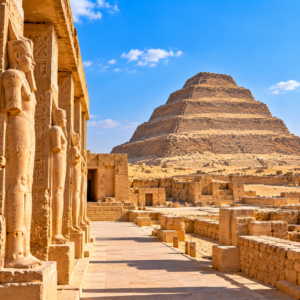
Saqqara offers a different perspective on ancient Egypt from the one most travelers experience at the Pyramids of Giza. Instead of focusing on three enormous royal pyramids, this extensive archaeological landscape reveals how pyramid construction developed, how ancient Egyptians prepared for the afterlife, and how royal and elite burials evolved over thousands of years.
The site’s most famous monument is the Step Pyramid of Djoser, a six-tiered structure that represents a major turning point in ancient Egyptian architecture. But Saqqara is much more than one pyramid. The necropolis contains other pyramids, decorated tombs, underground burial galleries, temples, and archaeological remains from several historical periods.
Located southwest of Cairo, Saqqara is an excellent addition to an Egypt itinerary for travelers interested in archaeology, ancient history, and monuments beyond the usual tourist route.
Before visiting, it helps to understand which attractions matter most, how much time to allow, which tickets you may need, and whether to combine Saqqara with Giza or nearby Dahshur. This guide covers the essential information for planning your trip.
Where Is Saqqara in Egypt?
Saqqara is an archaeological site southwest of Cairo, near the area of ancient Memphis, one of the most important cities in ancient Egyptian history.
It forms part of the wider Memphis necropolis, a vast burial landscape that developed over many centuries. The site lies farther south than the Giza Plateau, making it a separate excursion rather than an extension of the same archaeological complex.
The journey from central Cairo depends on your starting point and traffic. A private car or organized tour is often the simplest way to visit because the monuments are spread across a large area and public transport may not take you directly to every attraction.
Saqqara can also be combined with Dahshur or the archaeological remains of Memphis, but these are separate stops. If you want to explore several sites in one day, plan your route carefully instead of assuming that short distances on a map will translate into quick journeys.
Why Is Saqqara Important?
Saqqara was one of the principal cemeteries associated with ancient Memphis. Royal burials, elite tombs, and religious monuments were established here over an exceptionally long period.
The official Egyptian Ministry of Tourism and Antiquities identifies archaeological remains at Saqqara dating from the earliest dynasties through the Old Kingdom, Middle Kingdom, New Kingdom, and later periods. The site also contains evidence of Egypt’s Coptic Christian heritage.
This long history is what makes Saqqara especially interesting.
At Giza, visitors often concentrate on the monumental pyramids of Khufu, Khafre, and Menkaure. Saqqara allows you to explore earlier developments in royal architecture and see how burial traditions changed over time.
It is also an important location for understanding the relationship between royal tombs and the surrounding cemetery. Many high-ranking officials and members of elite families were buried in decorated tombs near the royal monuments.
For visitors interested in the development of ancient Egyptian civilization, Saqqara offers a broader archaeological story than a visit focused on one monument alone.
What Is the Step Pyramid of Djoser?
The Step Pyramid is Saqqara’s most famous landmark and the main reason many travelers visit the site.
Built for King Djoser during the Third Dynasty, the pyramid is widely recognized as the earliest major stone pyramid in ancient Egypt and one of the oldest surviving monumental stone structures.
Unlike the smooth-sided pyramids at Giza, Djoser’s pyramid has six stacked levels that create its distinctive stepped profile.
The design represents an important stage in the development of royal funerary architecture. Earlier royal and elite burials commonly used mastabas, rectangular structures built above underground burial chambers. The Step Pyramid transformed this architectural tradition into a much larger monument.
The complex is traditionally associated with the architect Imhotep, who is credited with a major role in this architectural innovation.
What can you see at the Step Pyramid complex?
The pyramid is the central attraction, but the surrounding complex is also worth exploring.
Look for the monumental entrance colonnade, courts, reconstructed architectural features, and remains associated with royal ceremonies. The complex was designed as more than a tomb: it included structures intended to support the king’s continued existence and royal role in the afterlife.
The South Tomb is another important feature. Its exact purpose remains a subject of archaeological interpretation, but it is generally understood to have had a special symbolic or funerary role within Djoser’s complex.
Allow enough time to look at the architecture around the pyramid rather than taking a quick photograph and leaving.
What Other Attractions Should You See in Saqqara?
The Step Pyramid is the obvious starting point, but several other attractions can make your visit more rewarding.
The Pyramid of Unas
The Pyramid of Unas is particularly important for visitors interested in ancient Egyptian religious texts.
Unas was a Fifth Dynasty king, and his pyramid is known for containing the earliest surviving example of the Pyramid Texts inscribed on the walls of a royal burial chamber. These texts were intended to help the deceased king in the afterlife.
Although the pyramid is less visually impressive from the outside than the Step Pyramid, its historical and religious significance is considerable.
Check current access arrangements before planning to enter it, as access to individual monuments may change.
The Pyramid of Teti
The Pyramid of Teti is another important royal monument at Saqqara. Teti ruled during the Sixth Dynasty, and his pyramid belongs to a later stage of Old Kingdom royal burial architecture.
The surrounding area also contains elite tombs associated with officials who served the royal administration.
If you are interested in the relationship between kings and their officials, this part of Saqqara can help you understand how royal burial landscapes developed beyond the principal pyramid.
The Tomb of Mereruka
The Tomb of Mereruka is one of the notable decorated tombs at Saqqara.
Mereruka was a high-ranking official during the Sixth Dynasty. The tomb’s reliefs and scenes provide insight into elite life, religious beliefs, agricultural activities, crafts, and other aspects of ancient Egyptian society.
These decorated tombs offer a different experience from visiting a pyramid. Instead of focusing on monumental scale, you can examine the artistic details and scenes preserved on the walls.
Allow extra time if you are interested in ancient Egyptian art and daily life.
The Tombs of the Nobles
Saqqara contains numerous tombs belonging to officials and other elite individuals.
Their decorations can include scenes of farming, food production, fishing, animal husbandry, offerings, and religious rituals. Such imagery provides valuable evidence about the lives and beliefs of people connected with the royal court.
Not every tomb is necessarily open to visitors at every time, so confirm which tombs are accessible when purchasing tickets.
The Serapeum
The Serapeum is one of Saqqara’s most distinctive archaeological attractions.
It consists of underground galleries associated with the burial of the sacred Apis bulls, which were connected with the god Ptah and the religious traditions of Memphis.
The galleries were used over a long period, extending from the New Kingdom into the Ptolemaic era. The monumental burial arrangements reflect the importance of the Apis bull cult in ancient Egyptian religion.
The Serapeum is especially interesting if you want to understand how animal cults and religious practices formed part of Egypt’s wider funerary landscape.
Check its current opening status before visiting, as underground attractions can have separate access arrangements.
The Imhotep Museum
The Imhotep Museum displays archaeological objects associated with Saqqara and the surrounding area.
It provides useful context for the monuments outside, helping visitors understand the artifacts, burial practices, and historical periods represented across the site.
If you have limited time, prioritize the Step Pyramid and the monuments that interest you most. If you have several hours available, the museum can add another dimension to the visit.
How Long Do You Need at Saqqara?
The time required depends on how many monuments you want to see and whether you intend to enter tombs or visit the museum.
For a short visit focused on the Step Pyramid, allow around two hours at the site. If you want to explore several pyramids, decorated tombs, and the Serapeum, a half-day or longer is more realistic.
Use these estimates as a starting point rather than a fixed timetable.
| Visit type | Suggested time at Saqqara | Best for |
|---|---|---|
| Quick visit | Around 2 hours | Step Pyramid and main complex |
| Standard visit | 3–4 hours | Step Pyramid plus selected additional monuments |
| Extended visit | 4–5+ hours | Several tombs, other pyramids, and the Serapeum |
| Combined archaeological day | Most of the day | Saqqara plus Dahshur or Memphis |
These estimates exclude travel time from Cairo and any additional stops. Traffic, ticket queues, access restrictions, and the distances between monuments can change your schedule.
If ancient Egyptian architecture is a major interest, give Saqqara more time than you would for a brief photographic stop.
Saqqara Ticket Prices and Opening Hours
Saqqara has several ticket categories because the archaeological site contains multiple monuments and visitor areas.
The official Ministry of Tourism and Antiquities listing currently shows the following prices for foreign visitors:
| Ticket category | Listed adult price |
|---|---|
| Saqqara archaeological area | EGP 600 |
| Noble Tombs and New Kingdom Tombs | EGP 400 |
| Tomb of Mereruka | EGP 200 |
| Pyramid of Djoser | EGP 280 |
| South Tomb in Djoser’s complex | EGP 300 |
| Serapeum | EGP 340 |
| Inclusive ticket | EGP 1,400 |
The inclusive ticket is described as covering the site, Imhotep Museum, Noble Tombs, New Kingdom Tombs, Tomb of Mereruka, and Tomb of Mehu. Read the current ticket description carefully to confirm which attractions are included and whether additional monument tickets are necessary.
These prices are subject to change. The official pages for Saqqara and the Step Pyramid have shown different details for certain ticket categories and opening times. Confirm the live price and access conditions before making a decision.
Where should you buy tickets?
Start with the official Ministry of Tourism and Antiquities website:
Saqqara — official archaeological site page
You can also review the dedicated monument page:
Step Pyramid Complex of Djoser
The general Saqqara listing currently shows opening hours of 8:00 AM to 4:00 PM, while the separate Step Pyramid page lists 8:00 AM to 5:00 PM. Because these listings are not fully consistent, verify the hours for your planned visit and arrive early enough to explore the monuments you want to see.
What Is the Best Time to Visit Saqqara?
The cooler months are generally more comfortable for exploring Saqqara, especially if you intend to walk between several monuments.
The site includes open areas with limited shade, so warm weather can make a long visit tiring. During hotter months, start early, bring water, and prioritize the monuments that matter most to you.
Morning visits are usually the most practical because they leave more time before the heat builds and provide flexibility if you want to continue to another archaeological site later.
If you are planning a combined trip to Saqqara and Dahshur, remember that both involve outdoor walking and travel between locations. It is better to explore fewer places properly than to rush through every stop.
How Do You Get to Saqqara from Cairo?
The most convenient option for many travelers is a private car, driver, or organized tour.
Saqqara is spread across a large archaeological landscape, and reaching the site is only part of the journey. You may also need transportation between monuments, depending on your route and which areas are open.
Private driver
A private driver can simplify a visit, especially if you want to combine Saqqara with Dahshur or Memphis.
Agree on the pickup location, total price, waiting time, and return arrangements before starting the trip.
Guided tour
A guided tour can be useful if you want historical explanations and help organizing a route through the site.
Before booking, confirm which monuments are included, whether the guide will enter the archaeological areas with you, and whether admission tickets are part of the price.
Taxi or ride-hailing service
A taxi or ride-hailing service may work for the journey from Cairo, depending on availability and your starting point. However, plan the return trip in advance rather than assuming another ride will always be immediately available at the site.
Public transportation
Independent travelers may use a combination of public transport and local transfers, but reaching individual monuments can be less straightforward than visiting a central Cairo attraction.
If your priority is seeing several parts of Saqqara in one day, arranging transportation ahead of time can save considerable effort.
Should You Visit Saqqara or the Pyramids of Giza?
Saqqara and Giza are both important archaeological destinations, but they offer different experiences.
Giza is best known for the Great Pyramid of Khufu, the pyramids of Khafre and Menkaure, and the Great Sphinx. Its principal attraction is the scale and visual impact of these monuments.
Saqqara offers a broader view of the development of royal burial architecture, with the Step Pyramid, other pyramids, decorated tombs, and the Serapeum.
| Comparison | Saqqara | Giza |
|---|---|---|
| Main highlight | Step Pyramid of Djoser | Great Pyramid and the other principal pyramids |
| Main appeal | Architectural development and diverse tombs | Monumental pyramids and the Sphinx |
| Variety of burial structures | Extensive | Extensive, with a different emphasis |
| Ideal visitor | History and archaeology enthusiasts | First-time visitors and pyramid enthusiasts |
| Typical visit | Several hours for multiple monuments | Several hours for the principal monuments |
| Can both be visited? | Yes, with careful planning | Yes, as a separate stop |
If you have only one day for ancient Egyptian monuments near Cairo, Giza may be the obvious first choice for its iconic landmarks. If you have more time, Saqqara adds historical depth and lets you explore an earlier stage in pyramid construction.
For travelers with a strong interest in archaeology, visiting both is highly worthwhile.
Can You Visit Saqqara and Dahshur in One Day?
Yes. Saqqara and Dahshur can be combined into one archaeological day, especially if you arrange transportation in advance.
Saqqara is the better place to begin if you want to focus on the Step Pyramid, decorated tombs, and the Serapeum. Dahshur adds a different perspective on pyramid development through monuments such as the Bent Pyramid and the Red Pyramid.
However, the two sites are separate, and visiting both requires travel time, separate entrance arrangements, and enough time to explore.
A practical approach is to start at Saqqara in the morning, select the monuments you most want to see, and continue to Dahshur if time and opening hours allow.
If you also want to visit Memphis or a museum, consider whether the schedule will become too crowded. A full day can be rewarding, but it should not depend on every journey taking exactly as long as expected.
What Should You Wear and Bring to Saqqara?
Saqqara involves walking through open archaeological areas, and some paths can be uneven. Practical clothing and good footwear are important.
Bring:
- Comfortable walking shoes
- Drinking water
- Sunscreen
- Sunglasses and a hat
- A charged phone or camera
- A portable battery
- Tickets and any required identification
- A light layer during cooler months
Wear clothing appropriate for the weather and respectful of local customs.
If you intend to enter underground galleries or tombs, be prepared for different conditions from those outdoors. Follow the instructions provided by site staff and do not enter closed or restricted areas.
Is Saqqara Suitable for Families?
Families can visit Saqqara, but the experience depends on children’s ages, walking ability, and interest in archaeological sites.
The Step Pyramid is a strong focal point for a family visit because its unusual shape is easy to appreciate. However, a longer itinerary involving several tombs and monuments can become tiring, especially in hot weather.
Families should prioritize a few attractions, bring water, and allow time for breaks. Entering underground areas may not suit every visitor, so consider the conditions before including them in the plan.
A focused visit is usually more enjoyable than attempting to cover every monument in one day.
Practical Tips for Visiting Saqqara
Decide which monuments matter most
Saqqara covers a large area, so choose your priorities before arriving. The Step Pyramid is the obvious starting point, followed by the tombs or other monuments that match your interests.
Check which tombs are open
Access arrangements can vary. Do not assume every tomb or underground attraction will be open on your travel date.
Confirm ticket inclusions
Some attractions require separate admission. Read the ticket description carefully before buying an inclusive or individual ticket.
Arrange transportation
A driver or organized tour can simplify travel between monuments, particularly if you are also visiting Dahshur.
Allow extra time
Walking, photographs, and historical explanations can take longer than expected. Leave a buffer if you have another stop planned.
Follow conservation rules
Do not touch decorated surfaces, enter restricted areas, or ignore instructions from site staff. Preserving the monuments is part of responsible travel.
Frequently Asked Questions About Saqqara Egypt
What is Saqqara famous for?
Saqqara is best known for the Step Pyramid of Djoser, an early milestone in stone pyramid construction. The site also contains other pyramids, decorated tombs, the Serapeum, and monuments from several periods of Egyptian history.
Is Saqqara older than the Pyramids of Giza?
The Step Pyramid of Djoser was built before the main pyramids at Giza. It represents an earlier stage in the development of royal pyramid architecture.
How far is Saqqara from Cairo?
Saqqara is southwest of Cairo. The journey time depends on your starting point and traffic, so allow extra time when planning a visit.
How long should I spend at Saqqara?
Around two hours may be enough for a focused visit to the Step Pyramid complex. Allow three to five hours or more if you want to explore several monuments, tombs, and the Serapeum.
Can I visit Saqqara without a guide?
Yes. Independent visits are possible, but transportation and the layout of the site require planning. A knowledgeable guide can help explain the historical significance of the monuments.
Can you go inside the Step Pyramid?
Access depends on the current visitor arrangements and ticket availability. Check the official monument listing before planning an interior visit.
Is the Serapeum worth visiting?
It is particularly interesting for travelers who want to understand the religious traditions of ancient Memphis and the burial of the sacred Apis bulls. Check current access arrangements before going.
Can I visit Saqqara and Giza on the same day?
It may be possible, but both sites deserve time. If you want a relaxed experience, consider visiting them on separate days. If your schedule is limited, prioritize the monuments that interest you most and arrange transportation carefully.
Is Saqqara worth visiting if I have already seen Giza?
Yes. Saqqara offers a different historical experience, including the Step Pyramid, decorated elite tombs, and other archaeological features that are not the main focus of a standard Giza visit.
What is the best time to visit Saqqara?
The cooler months are generally more comfortable for walking around the site. During warmer months, an early start, water, and sun protection are especially important.
Final Takeaway: Is Saqqara Worth Visiting?
Saqqara is one of the most rewarding archaeological destinations near Cairo for travelers who want to understand how ancient Egyptian architecture and burial traditions developed.
The Step Pyramid of Djoser is the central attraction, but the site’s value extends to its other pyramids, decorated tombs, underground galleries, and evidence of religious life across many centuries.
For a short visit, focus on the Step Pyramid complex. With more time, add the tombs, the Serapeum, and the Imhotep Museum according to the current access arrangements.
If your itinerary allows, combine Saqqara with Dahshur or Memphis, but do not underestimate the time required to travel between sites.
The most rewarding approach is to plan around your interests, confirm tickets and opening hours before departure, and give yourself enough time to appreciate the history beyond the monuments’ famous silhouettes.