
How Much Does a Trip to Egypt Cost? Complete Travel Budget
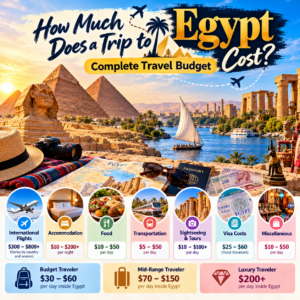
How much money do you actually need for a trip to Egypt?
There is no single answer because the cost of an Egypt vacation can change dramatically depending on how you travel. A backpacker staying in simple accommodation and using local transportation will spend very differently from someone booking four-star hotels, private guides and domestic flights.
The good news is that Egypt allows travelers to build very different types of trips around the same destinations. You can spend more on comfortable hotels and guided experiences while keeping food and local transportation relatively affordable, or reduce accommodation and tour costs if your priority is seeing as much as possible on a tighter budget.
For planning purposes, it is more useful to divide your Egypt budget into international flights, accommodation, food, transportation, sightseeing, tours, visa costs and miscellaneous spending rather than relying on one daily number.
Current 2026 travel-cost data from Budget Your Trip puts average spending for a typical traveler at around $38 per person per day, while its higher-budget category is around $87 per person per day. Another 2026 cost analysis using current bookable travel products places a 10-day mid-range Egypt trip at roughly $1,800–$3,500 per person including international flights, illustrating how much the total changes once hotels, tours and flights are included. These figures are snapshots, not fixed prices.
So rather than asking, “Is Egypt cheap?” the more useful question is:
What kind of Egypt trip are you planning?
Egypt Travel Cost at a Glance
Your total budget will depend on the number of days and your travel style.
| Expense | Budget Traveler | Mid-Range Traveler | Luxury Traveler |
|---|---|---|---|
| Accommodation | Simple hotels/hostels | Comfortable 3–4 star hotels | 4–5 star hotels |
| Food | Local restaurants | Mix of local & tourist restaurants | Higher-end restaurants |
| Transportation | Trains, buses, ride-hailing | Mix of trains, flights and transfers | Private transfers & flights |
| Sightseeing | Self-guided | Guides for major sites | Private guides/tours |
| Activities | Selective | Several paid activities | Private experiences |
| Overall style | Cost-conscious | Comfortable | High-comfort |
As a broad planning framework, travelers often fall into three very different budget categories:
- Budget: roughly $30–$60 per person per day inside Egypt
- Mid-range: roughly $70–$150 per person per day inside Egypt
- Luxury: $200+ per person per day inside Egypt
These are planning ranges rather than official price bands. Accommodation, private tours, Nile cruises and domestic flights can push the total considerably higher.
Recent travel-cost data shows why there is such a large spread: accommodation, intercity transportation, food and entertainment make up very different portions of the budget depending on the traveler.
International airfare is normally best treated as a separate expense because departure country and travel dates can change it more than almost any other part of the trip.
How Much Does a 7-Day Trip to Egypt Cost?
A one-week trip can work well if you concentrate on the most important destinations.
A practical first-time route would be:
Cairo + Giza + Luxor
or:
Cairo + Giza + Luxor + Aswan
The first option gives you more time in each destination. The second covers more of Upper Egypt but requires tighter scheduling.
For seven days, a traveler staying in simple accommodation and eating mostly at local restaurants can keep the in-country budget relatively low. A mid-range traveler who uses comfortable hotels, organized sightseeing and some private transportation will spend considerably more.
Budget Your Trip’s current data gives an average of around $266 per person for one week, while its published daily figures vary according to travel style and what is included.
The important point is that this type of average should not be treated as a quotation for your own trip.
How Much Does a 10-Day Trip to Egypt Cost?
Ten days gives you enough time to build a more complete first visit.
A common route is:
Cairo → Luxor → Aswan → Red Sea
Another option is:
Cairo → Luxor → Aswan → Abu Simbel
A 2026 analysis based on current bookable travel products estimates that a mid-range 10-day Egypt trip can fall around $1,800–$3,500 per person including international flights, while budget trips can be substantially lower and private guided trips substantially higher.
The difference comes largely from the hotel category, number of private tours, transportation choices and whether a Nile cruise is included.
How Much Does a 14-Day Trip to Egypt Cost?
Two weeks gives you enough time to combine the major historical destinations with several days at the Red Sea.
A typical route could be:
Cairo & Giza — 4 nights
Luxor — 3 nights
Aswan — 2 nights
Abu Simbel — day trip
Red Sea — 3 nights
For a budget traveler, two weeks can be kept relatively controlled by using simple hotels, local restaurants and trains or buses where practical.
For a mid-range traveler, the largest costs are likely to come from accommodation, guided excursions, intercity transportation and optional experiences.
For a luxury trip, private guides, premium hotels, private transfers and a Nile cruise can quickly become the dominant expenses.
Accommodation Costs in Egypt
Hotels are one of the biggest variables in your Egypt budget.
The same destination can offer hostels, simple local hotels, international chains, boutique properties and luxury resorts.
Instead of asking for the “average hotel price,” decide which category matches your trip.
Budget Accommodation
Budget travelers can look for:
- Hostels
- Guesthouses
- Simple local hotels
- Basic private rooms
These properties can reduce the overall cost significantly, particularly if you are traveling for several weeks.
The trade-off may be location, facilities, breakfast options or room quality.
Mid-Range Hotels
For many first-time visitors, mid-range accommodation provides a practical balance.
You can usually prioritize:
- Good location
- Private bathroom
- Air conditioning
- Breakfast
- Reliable reviews
- Easy access to transportation
Spending slightly more for a convenient location can sometimes save money on transportation and reduce the time spent crossing busy cities.
Luxury Hotels
Luxury accommodation is available in Cairo, Luxor, Aswan and Red Sea resorts.
At this level, the hotel itself can become part of the travel experience, particularly when staying beside the Nile or at a Red Sea resort.
Luxury accommodation can also change the total trip budget dramatically, so it should be calculated separately rather than included in a generic “daily Egypt cost.”
How Much Does Food Cost in Egypt?
Food is one of the expenses where travelers have considerable control.
Local Egyptian food can be inexpensive compared with many international tourist destinations, while restaurants in major hotels and upscale areas can cost much more.
A typical day might include:
Breakfast: hotel breakfast or local bakery/café
Lunch: local Egyptian restaurant
Dinner: restaurant or hotel
Drinks/snacks: bottled water, tea, coffee and snacks
Budget Your Trip’s current traveler data estimates food spending at around $17 per person per day on average, although actual spending varies considerably by eating habits.
What Can You Eat on a Budget?
Popular local options include:
- Koshary
- Ful medames
- Taameya
- Falafel sandwiches
- Grilled chicken
- Grilled meat
- Rice and vegetable dishes
- Egyptian bread
- Tea and coffee
You do not have to eat at expensive tourist restaurants every day.
In fact, mixing local meals with a few nicer restaurants can give you more variety without dramatically increasing your food budget.
Transportation Costs in Egypt
Transportation can either be one of your biggest savings opportunities or one of your largest expenses.
Egypt has trains, buses, taxis, ride-hailing services, domestic flights and organized private transfers. The official Egyptian tourism portal lists trains, buses, taxis and ride-hailing services among the common options for tourists, while domestic flights connect major destinations.
Cairo Transportation
In Cairo, you can use:
- Metro
- Ride-hailing apps
- Taxis
- Private drivers
- Organized tours
For visitors staying in central areas, combining the metro with ride-hailing can be practical.
The official tourism authority notes that ride-hailing apps are widely used in Greater Cairo and Alexandria.
Cairo to Luxor
You generally have two main choices:
Train: useful for travelers who prefer overland travel.
Flight: faster, but remember to include airport transfers and check-in time when comparing the total journey.
Your choice should depend on your schedule rather than simply choosing whichever option has the shortest published travel time.
Luxor to Aswan
This route can be done by train, private transfer or Nile cruise.
The train is useful for independent travelers.
A private transfer provides more flexibility.
A Nile cruise turns the transportation itself into part of the vacation.
The official tourism authority notes that Nile cruises commonly operate between Luxor and Aswan, with itineraries ranging from several nights.
Nile Cruise Cost
A Nile cruise can be one of the most significant optional expenses in an Egypt itinerary.
Prices vary according to:
- Cruise category
- Number of nights
- Cabin type
- Travel season
- Meals included
- Excursions
- Private guide arrangements
- Ship facilities
There is therefore no useful single “Nile cruise price.”
When comparing cruises, look beyond the advertised cabin price.
Check whether the package includes:
- Meals
- Temple excursions
- Transfers
- Guide services
- Entrance tickets
- Drinks
- Wi-Fi
- Tips or service charges
A cheaper cruise may not remain cheaper after adding the services you actually need.
Attraction and Entrance Fees
Entrance fees are another part of the Egypt budget that travelers sometimes underestimate.
Major archaeological sites and museums have different ticket prices, and foreign visitors can pay different rates from Egyptian residents.
Prices also change, so old travel blogs should not be treated as a reliable current price list.
For example, the Egyptian Ministry of Tourism and Antiquities currently lists the foreign-adult entry price for the Cairo Citadel at EGP 550, with separate student and Egyptian rates.
The practical lesson is simple:
Build a sightseeing allowance into your budget instead of assuming attractions are free or using outdated ticket prices.
If you plan to visit many archaeological sites, those individual tickets can add up.
Tour and Guide Costs
Guided tours are optional, but they can be valuable at places where historical context is a major part of the experience.
You might pay for:
- Giza private guide
- Cairo city tour
- Luxor West Bank tour
- Luxor East Bank tour
- Aswan excursion
- Abu Simbel tour
- Desert excursion
- Red Sea boat trip
- Diving or snorkeling
A private guide costs more than joining a group, but it gives you greater flexibility.
For a budget-conscious traveler, one approach is to use guides only for the places where interpretation matters most and explore other areas independently.
Visa Costs
Visa requirements depend on nationality.
For travelers eligible to use Egypt’s official e-Visa system, the current government portal lists the tourism e-Visa fees as:
- Single-entry tourism visa: $30
- Multiple-entry tourism visa: $65
The official portal also states that the e-Visa application should be created at least seven days before departure.
Not every traveler will use the same visa process, so check your nationality’s requirements before including a visa fee in your final budget.
How Much Cash Should You Carry?
Egypt remains a relatively cash-oriented destination, particularly for taxis, small shops and smaller establishments.
The official tourism authority specifically advises visitors to carry Egyptian cash even though credit cards are accepted in major cities and tourist destinations.
Rather than carrying your entire trip budget in cash, use a combination of:
- Bank cards
- ATMs
- Some Egyptian pounds
- A small emergency reserve
Keep larger amounts secure and separate from the money you carry during daily sightseeing.
Tipping in Egypt
Tipping is part of the travel budget that is easy to overlook.
Depending on your itinerary, you may encounter situations involving:
- Hotel staff
- Drivers
- Guides
- Restaurant staff
- Boat crews
- Porters
The amount and circumstances vary, so it is better to keep some small denominations available rather than treating tipping as one large expense at the end of the trip.
If you book a guided tour or Nile cruise, check whether any service charges or tipping arrangements are already included.
Travel Insurance
Travel insurance should be treated as a separate line in your budget.
The price depends on:
- Your age
- Trip length
- Nationality/residence
- Coverage level
- Activities
- Medical coverage
- Cancellation protection
If your trip includes diving, desert excursions or other activities, make sure the policy actually covers them.
The cheapest policy is not necessarily the same as the policy with the coverage you need.
International Flights to Egypt
International airfare can be one of the largest costs, but it is also the hardest expense to generalize.
Your ticket price depends on:
- Departure country
- Travel dates
- Airline
- Baggage
- Number of stops
- Booking date
- Arrival airport
- Return airport
A traveler from Europe may have a very different airfare from someone flying from North America, Asia or Australia.
For a multi-city Egypt trip, also compare round-trip Cairo with open-jaw flights, such as flying into Cairo and returning from a Red Sea destination.
The latter can sometimes reduce unnecessary backtracking, although the airfare itself may be different.
Sample Egypt Budgets
Here is a practical way to think about the overall budget before booking.
Budget Egypt Trip
A budget itinerary might include:
- Hostel or simple hotel
- Local Egyptian restaurants
- Trains and buses
- Ride-hailing instead of private drivers
- Self-guided sightseeing
- A small number of paid tours
- Standard attraction tickets
A traveler using this approach might target roughly $30–$60 per day inside Egypt, excluding international flights.
That does not mean every day will cost the same.
A day in Cairo using public transportation can be inexpensive, while a day trip to Abu Simbel or a paid boat excursion can cost significantly more.
Mid-Range Egypt Trip
A mid-range itinerary might include:
- Comfortable 3–4 star hotels
- Restaurant meals
- Some domestic flights
- Comfortable trains
- Private or small-group guides
- Several paid excursions
- A Red Sea hotel or resort
A useful planning range is around $70–$150 per person per day inside Egypt, excluding international flights.
This category gives you considerably more flexibility without requiring luxury hotels throughout the trip.
Luxury Egypt Trip
A luxury itinerary might include:
- Five-star hotels
- Private airport transfers
- Private guides
- Domestic flights
- Luxury Nile cruise
- High-end restaurants
- Private sightseeing
- Premium Red Sea resort
At this level, $200+ per person per day is a reasonable starting point for planning, but there is no meaningful upper limit once premium hotels, private experiences and luxury cruises are included.
Example: 7-Day Egypt Budget
Imagine a couple traveling for one week.
Their trip might include:
4 nights Cairo
3 nights Luxor
A budget version could focus on simple accommodation, local restaurants and trains.
A mid-range version could add comfortable hotels, private sightseeing in Giza and Luxor, and more convenient transportation.
A luxury version could include five-star hotels, private transfers and guides.
The same itinerary therefore produces three very different totals.
This is why published “average Egypt trip costs” should be used as a starting point rather than a quote.
Example: 10-Day Egypt Budget
A common 10-day itinerary could look like:
Days 1–3: Cairo and Giza
Days 4–6: Luxor
Days 7–8: Aswan
Day 9: Abu Simbel
Day 10: Departure
For a more relaxed trip, replace Abu Simbel with another Aswan day.
For a beach-focused itinerary, replace one or two Upper Egypt days with Hurghada or another Red Sea destination.
Your budget will change accordingly because domestic transportation, excursions and hotel locations change.
Example: 14-Day Egypt Budget
A two-week itinerary could include:
Cairo & Giza — 4 nights
Luxor — 3 nights
Aswan — 2 nights
Abu Simbel — 1 day
Red Sea — 3 nights
This is a useful length for travelers who want both historical sightseeing and relaxation.
The main expenses to calculate are:
- International flights
- Hotels
- Cairo–Luxor transportation
- Luxor–Aswan transportation or cruise
- Abu Simbel excursion
- Red Sea transportation
- Attraction tickets
- Food
- Tours and guides
- Visa
- Insurance
- Miscellaneous spending
Add these categories separately and you will have a much more accurate personal budget.
How to Save Money on an Egypt Trip
You do not have to cut everything to travel on a budget.
Instead, choose where you want to spend.
Spend More on Location
A slightly more expensive hotel in a convenient location can reduce transportation time and costs.
Use Local Restaurants
You can experience Egyptian food without eating every meal in an expensive tourist restaurant.
Combine Independent and Guided Travel
Use a guide for the major archaeological sites where interpretation is valuable, then explore other areas independently.
Compare Train and Flight Costs
Do not automatically assume flying is the best option.
Consider the complete journey, including airport transfers and waiting time.
Travel During Your Preferred Shoulder Period
Hotel prices and demand can change by season, so compare dates rather than assuming there is one universally cheapest period.
Stay Longer in Fewer Places
Changing hotels every night creates transportation costs and wastes time.
A slower itinerary can sometimes be cheaper as well as more enjoyable.
Where You Should Not Try to Save Too Much
Some expenses have a direct effect on comfort and reliability.
Be cautious about choosing the absolute cheapest option for:
- Long-distance transportation
- Travel insurance
- Accommodation with consistently poor reviews
- Desert excursions
- Diving operators
- Private transfers in unfamiliar areas
Saving a small amount is not necessarily worthwhile if it creates a major logistical problem later.
Is Egypt an Expensive Destination?
Egypt can be relatively affordable compared with many long-haul destinations, but the answer depends heavily on how you travel.
Local food and transportation can be inexpensive.
International-chain hotels, private guides, luxury Nile cruises and Red Sea resorts can make the same trip considerably more expensive.
Current travel-cost data illustrates this wide range rather than a single fixed price.
So instead of planning around the idea that Egypt is simply “cheap,” build your budget around the experiences you actually want.
A Practical Egypt Budget Formula
Before booking anything, calculate your trip using this formula:
- international flights
- hotels
- visa
- intercity transportation
- local transportation
- food
- attraction tickets
- tours
- activities
- insurance
- shopping/miscellaneous
Add them all together for your total Egypt trip budget.
Then add an emergency buffer.
This approach is more useful than taking a generic daily average and assuming it will accurately predict your entire trip.
Final Thoughts
The cost of a trip to Egypt can range from a relatively economical independent vacation to a high-end luxury experience.
The biggest factors are not simply food or taxis. They are how many destinations you visit, where you stay, how you move between cities, how many guided experiences you book, and whether you include a Nile cruise or resort stay.
For a first-time traveler, the easiest way to control costs is to decide your travel style first.
If you are traveling on a budget, concentrate on fewer destinations and use local transportation.
If you want a comfortable mid-range trip, spend more on convenient hotels and selected guided experiences rather than upgrading everything.
If you want luxury, plan the Nile cruise, private transportation, hotels and guides as separate premium expenses.
Most importantly, don’t build your budget from outdated blog posts. Egypt’s prices can change, and the Egyptian e-Visa portal and official tourism authorities should be checked for current fees and travel information before departure.
Frequently Asked Questions
How much money do I need for a trip to Egypt?
It depends on your travel style. As a broad planning range, budget travelers can consider around $30–$60 per person per day inside Egypt, mid-range travelers around $70–$150, and luxury travelers $200 or more. International flights are separate.
Is Egypt cheap for tourists?
Egypt can be relatively affordable for food, local transportation and some accommodation, but private tours, luxury hotels, Nile cruises and resort stays can increase the total considerably.
How much does a 7-day trip to Egypt cost?
The total depends on flights, accommodation and travel style. Current traveler-cost data provides averages, but a personalized budget should be calculated using your actual hotels, transportation and activities.
How much does a 10-day Egypt trip cost?
A 10-day trip can range from a budget independent vacation to several thousand dollars per person for a comfortable or private trip. A current 2026 analysis places mid-range 10-day trips, including international flights, around $1,800–$3,500 per person.
How much does a Nile cruise cost?
There is no single price because cruise costs vary by ship, number of nights, cabin, season and included excursions. Compare the complete package rather than the advertised cabin price alone.
Should I carry cash in Egypt?
Yes. The official tourism authority notes that Egypt remains relatively cash-oriented, especially for taxis and smaller shops, although cards are accepted in major cities and tourist destinations.