
How to Plan a Trip to Egypt: A Step-by-Step Travel Guide
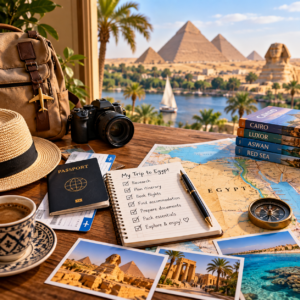
Planning a trip to Egypt becomes much easier once you stop treating the country as one destination. Cairo and Giza offer a very different experience from Luxor and Aswan, while the Red Sea resorts can turn a history-focused trip into a beach holiday. The challenge is deciding how to connect these places without spending too much of your vacation moving between them.
The most practical approach is to plan Egypt in stages: decide what you want to see, choose the right number of days, build a realistic route, check entry requirements, choose transportation, book accommodation, and then prepare for the weather and local conditions.
Egypt’s official tourism authority divides the country into several major travel regions, including the Nile, Red Sea, Mediterranean coast, and deserts and oases, with experiences ranging from archaeological sites and museums to cruising, outdoor activities and beaches.
This step-by-step guide shows you how to turn those choices into a practical Egypt itinerary without trying to fit everything into one trip.
Step 1: Decide What You Want From Your Egypt Trip
Before looking at hotels or flights, decide what kind of trip you are planning.
Egypt can be a history-focused journey, a cultural city break, a Nile trip, a beach vacation, or a combination of several experiences.
Your priorities might look like this:
| Your priority | Destinations to consider |
|---|---|
| Ancient Egyptian history | Cairo, Giza, Luxor, Aswan |
| Museums and city life | Cairo |
| Temples and tombs | Luxor |
| Nile scenery | Luxor, Aswan |
| Beach and diving | Hurghada, Sharm El Sheikh, Marsa Alam |
| Mediterranean atmosphere | Alexandria |
| Desert experiences | Fayoum, Siwa and selected desert areas |
You do not need to visit every destination.
If you have only a week, choosing three main bases will usually create a more manageable trip than trying to visit six or seven places.
Step 2: Decide How Many Days You Have
The number of days should determine your route—not the other way around.
A short trip can focus on Cairo and Giza. A week gives you enough room to add Luxor or Aswan. A longer holiday allows you to combine the historical route with several days on the Red Sea.
A practical starting point is:
| Trip length | Possible focus |
|---|---|
| 3–4 days | Cairo and Giza |
| 5–6 days | Cairo, Giza and Luxor |
| 7–8 days | Cairo, Luxor and Aswan |
| 9–10 days | Cairo, southern Egypt and the Red Sea |
| 12–14 days | A slower multi-region itinerary |
These are planning frameworks rather than fixed itineraries. The right route depends on your arrival airport, interests and willingness to travel between destinations.
The biggest mistake is assuming that every additional destination is automatically an improvement. Each move takes time, and a trip with fewer stops can leave you with more time to actually experience the places you came to see.
Step 3: Choose the Best Time to Visit
Egypt can be visited year-round, but the weather should influence your itinerary.
The official Egyptian tourism authority describes the country as generally warm and sunny, with regional differences. Its current travel information describes winter as roughly November through April and summer as May through October, with hot and dry conditions in much of the country during summer.
For travelers planning long days around archaeological sites, temperature matters because many of the most important attractions involve outdoor walking.
November to April
The cooler season is generally more comfortable for extensive sightseeing, particularly in Cairo and southern Egypt.
It is also a popular period for combining archaeological sightseeing with a Nile itinerary.
May to October
Summer can be very hot, especially in the south and desert areas. The Red Sea coast can have different conditions, with the official tourism authority noting lower humidity there than along the Mediterranean coast.
If you travel during the hotter months, build your sightseeing around the conditions rather than trying to follow an overly ambitious schedule.
Step 4: Build Your Route
Once you know your trip length and priorities, decide how the destinations connect.
A first-time visitor might choose a route such as:
Cairo → Luxor → Aswan
or:
Cairo → Luxor → Aswan → Red Sea
Another option is to use a Nile cruise as part of the southern route.
Why Route Planning Matters
Egypt is geographically large enough that transportation can take a meaningful part of your holiday.
The official tourism authority lists trains, buses, taxis and ride-hailing services among the common ways tourists move around Egypt, while private and licensed tourist vehicles are also available.
That means you should decide how you will move between cities before finalizing hotels.
For example, there is little value in booking an inexpensive hotel in one city if getting to your next destination requires a complicated journey that consumes most of the following day.
Step 5: Check Visa and Entry Requirements
Do this before finalizing your travel arrangements.
Visa requirements depend on your nationality. Egypt’s official e-Visa portal provides the current list of nationalities eligible to apply through the online system and explains the application process.
The official portal currently states that applicants must create an e-Visa application at least seven days before departure. The application is completed online and payment is made by card.
For nationalities eligible for the tourist e-Visa, the current listed fees are US$30 for a single-entry visa and US$65 for a multiple-entry visa. The portal also states that the passport should be valid for at least six months from the arrival date.
Do not rely on an old travel article for visa rules. Check the official portal shortly before your trip because eligibility and procedures can change.
Step 6: Decide How You Will Travel Between Cities
Transportation is one of the most important parts of planning an Egypt itinerary.
Domestic Flights
Flying can make sense when your itinerary covers distant destinations and your trip is short.
For a traveler with limited time, reducing a long overland journey can leave more hours for sightseeing.
Trains
Trains connect important cities along the Nile Valley and can be useful for travelers who want to travel overland.
However, booking arrangements can change, so check the current official railway information before depending on a particular service.
Nile Cruises
A Nile cruise can combine transportation, accommodation and sightseeing into one part of your trip.
This can be particularly useful if your priorities include Luxor, Aswan and the archaeological sites along the river.
Local Transportation
Inside major cities and tourist destinations, taxis and ride-hailing services are common. Egypt’s official tourism FAQ lists trains, buses, taxis and Uber among the transportation options used by tourists.
For excursions, airport transfers and desert activities, reputable hotels and tour operators can also arrange transportation.
Step 7: Choose Where to Stay
Once your route is fixed, choose accommodation based on location rather than price alone.
Cairo
Cairo is large, so the neighborhood you choose can affect how much time you spend traveling.
If sightseeing is your priority, look at the location relative to the attractions you plan to visit.
Giza
Staying in Giza can make sense if seeing the pyramids early in your trip is a major priority.
Luxor
Choose your location according to whether you want easy access to the East Bank, West Bank or Nile.
Aswan
A Nile-side location can be convenient if you want to combine sightseeing with time by the river.
Red Sea
For a coastal stay, choose based on the experience you want: resort facilities, diving, snorkeling, nightlife, or a quieter beach atmosphere.
The cheapest room is not always the cheapest option overall if its location creates additional transportation costs every day.
Step 8: Plan the Major Attractions First
You do not need to schedule every hour.
Instead, identify the attractions that would make you disappointed if you missed them.
For a history-focused trip, these might include:
- Giza Plateau
- Saqqara
- Egyptian museums
- Karnak Temple
- Luxor Temple
- Valley of the Kings
- Philae Temple
- Abu Simbel
Then organize the remaining time around those priorities.
This gives you flexibility if traffic, weather or transportation changes your plans.
Avoid Overloading Each Day
A common mistake is putting too many major attractions into one day.
Ancient sites can involve considerable walking, and museums can easily take longer than expected.
A realistic itinerary should contain some breathing room.
Step 9: Plan Around the Weather
Your daily schedule should reflect the season.
During hotter periods, consider visiting major outdoor archaeological sites earlier in the day and leaving museums or indoor activities for later.
The official tourism authority recommends lightweight, loose clothing, sunscreen, a hat, sunglasses and comfortable shoes. It also recommends carrying a scarf or light cardigan because visitors may need to cover their arms and legs at certain religious sites.
This is particularly useful when one itinerary combines hot outdoor sightseeing with visits to mosques, churches or other religious sites.
Step 10: Prepare Your Travel Documents
Keep your essential documents accessible before departure.
A useful travel folder should contain:
- Passport
- Visa or e-Visa documentation
- Flight details
- Hotel confirmations
- Travel insurance information
- Important contact details
- Copies of important documents
The official e-Visa portal instructs approved travelers to download and print their e-Visa for presentation at the port of entry.
The UK’s current Egypt travel advice also recommends keeping copies of important documents separately from the originals.
Digital copies stored securely can provide another backup.
Step 11: Decide How Much Cash You Need
Egyptian pounds are used for everyday transactions.
Cards can be useful in hotels, larger businesses and many tourist establishments, but it is practical to have some local cash for smaller purchases and everyday transportation.
Rather than exchanging a large amount of money at once, plan how you will access cash during the trip and use recognized financial services.
Your spending plan should separate:
- Accommodation
- Intercity transportation
- Local transportation
- Attractions
- Guides
- Food
- Activities
- Shopping
- Emergency expenses
This gives you a more realistic picture of the total trip cost than using one generic daily figure.
Step 12: Plan Your Safety and Travel Insurance
Travel advice should be checked shortly before departure because conditions can change.
As of September 23, 2026, the UK Foreign, Commonwealth & Development Office advises against travel to specific areas including North Sinai and within 20 km of the Egypt-Libya border, with additional restrictions for certain other regions.
The U.S. State Department currently lists Egypt at Level 2: Exercise Increased Caution, while also identifying specific higher-risk areas.
These advisories are geographically specific, so travelers should not treat them as a single assessment of every destination in Egypt.
Before booking activities, check the latest advice from your own government and make sure your travel insurance covers the destinations and activities on your itinerary.
The UK travel advice also recommends using reputable providers for services and excursions.
Step 13: Prepare What to Pack
Packing for Egypt does not need to be complicated.
Essentials
- Comfortable walking shoes
- Lightweight clothing
- Sunscreen
- Sunglasses
- Hat
- Reusable water bottle
- Light jacket for cooler evenings
- Scarf or light cardigan
- Travel adapter
- Copies of important documents
The official tourism authority specifically recommends lightweight cotton clothing, sun protection and comfortable shoes, while noting the usefulness of a light jacket or windbreaker in cooler seasons.
If your trip includes both archaeological sites and the Red Sea, pack for both sightseeing and beach time.
Step 14: Keep Some Days Flexible
A good itinerary does not need to be completely full.
Leave room for:
- A slower morning
- A restaurant you discover during the trip
- An unexpected museum visit
- A longer archaeological visit
- Weather changes
- Transportation delays
This is especially important when traveling between several Egyptian cities.
If every hour is booked, one delay can affect the entire itinerary.
Step 15: Create a Simple Booking Order
Once your route is decided, book the trip in this order:
1. Check entry requirements
Confirm your visa eligibility and passport requirements.
2. Book international flights
Try to make your arrival and departure airports work with your itinerary.
3. Book major intercity transportation
Decide whether you will fly, take trains, arrange private transportation or use a Nile cruise.
4. Book accommodation
Choose hotels according to the route and location.
5. Book major tours or guides
Especially for activities that require advance arrangements.
6. Plan daily sightseeing
Only after the major logistics are confirmed.
This order reduces the chance of booking accommodation in the wrong city or creating unnecessary backtracking.
A Simple 7-Day Egypt Planning Framework
If you have one week, you can use this as a starting framework rather than a rigid schedule.
| Day | Destination | Focus |
|---|---|---|
| 1 | Cairo | Arrival and light sightseeing |
| 2 | Cairo/Giza | Pyramids and major Cairo attractions |
| 3 | Cairo → Luxor | Travel and Luxor sightseeing |
| 4 | Luxor | Temples and archaeological sites |
| 5 | Luxor → Aswan | Nile route or transportation |
| 6 | Aswan | Nile, temples and local exploration |
| 7 | Departure | Return journey |
If your priority is the Red Sea, replace part of the southern route with a coastal stay rather than trying to add the beach destination on top of everything else.
Common Planning Mistakes to Avoid
Trying to Visit Too Many Cities
More destinations mean more transportation.
Choose a route that fits the number of days you actually have.
Booking Hotels Before Building the Route
The hotel may be excellent, but the location may not work with your final itinerary.
Treating Travel Time as Sightseeing Time
A transportation day is not the same as a full sightseeing day.
Ignoring the Weather
Outdoor archaeological sites can be physically demanding in extreme heat.
Using Old Visa Information
Entry requirements can change. Always check the official e-Visa portal before departure.
Planning Every Minute
A little flexibility can make the trip much easier when conditions change.
Traveling to Restricted Areas Without Checking Advice
Egypt contains regions with different security conditions. Check current regional travel advice rather than assuming that the rules for Cairo or Luxor apply everywhere.
Frequently Asked Questions
How far in advance should I plan an Egypt trip?
There is no single required planning period for every traveler. The important point is to check visa requirements early, especially if you need an e-Visa. Egypt’s official portal says e-Visa applications should be created at least seven days before departure.
How many days are enough for Egypt?
Around 7–10 days provides enough time to combine several major destinations without making the entire trip about transportation. Shorter trips can focus on Cairo and Giza, while longer trips allow additional time in southern Egypt or at the Red Sea.
Should I visit Cairo, Luxor and Aswan?
They form a logical route for travelers primarily interested in ancient Egyptian history, but you do not need to visit all three if your trip is short.
Is a Nile cruise necessary?
No. A cruise is one way to experience the Nile and connect destinations in southern Egypt. Other transportation options are available.
What should I book first?
Start with entry requirements and your overall route, then international flights, major intercity transportation, accommodation and tours.
Do I need to speak Arabic?
Not necessarily. Egypt’s official tourism authority says many people in urban centers and popular tourist destinations understand and speak English, and multilingual guides are available.
Sources & References
- Experience Egypt — Official Egyptian Tourism Authority — practical information, weather, packing, transportation and entry guidance.
- Egypt e-Visa Portal — official visa application process and requirements.
- UK Foreign Travel Advice — Egypt — current regional travel and safety advice, checked September 23, 2026.
- U.S. Department of State — Egypt Travel Advisory — current U.S. travel advisory.